Rigorous forms or naturalistic disorder? How to emphasize the architecture of a modern house, where there is a lot of glass, metal, concrete? The environment adds additional flavor to the architecture of the house, so it is worth looking for landscaping ideas and coming up with a concept for the entire environment.
THE IDEA OF GREENING AND THE CONCEPT OF ENVIRONMENT
Blocks of new homes are being delivered recently catchy nameswhich are often mentioned plant or other natural features specific to the area. Plants always have a positive association, they add a kind of warmth, movement, character to the structure, so it sounds very good when the idea of the structure is realized in the environment.

“Beržų terastos” is a neighborhood in Vilnius that received the “Tendencija 2015” award for its environmental project. The author of the photo is L. Garbačauskas
The idea is worth it for anyone for an individual hometo avoid the usual combination of lawn, thuja and conifers, regardless of the architecture and context.
Take a look around, perhaps the nearby forest, the nearby roaring sea or simply the busy city streets and industrial districts will suggest the idea. A concept can be based on an emotion from a childhood memory, a vacation, a trip, an image, etc.
You will get support from the landscape ideawhen choosing decorative details or plants, e.g. for the sea theme, drought-resistant herbaceous perennials (zunda, yarrow, notre lanosa, thyme), flower beds with soft bluish shades (catnip, sage, lavender) and, of course, wavy decorative herbs (various sedges, whip millet, soruole, miscanthus) would be suitable.
The idea will ask you whether to stick with modern minimalism or a more natural bent. This is where two main trends emerge: laconic angular architectural forms are possible make evident OR soften.
LACONIC FORMS AND NATURAL ENVIRONMENT
The variety of plants, the naturally free forms, the soft and moving silhouettes contrast perfectly with the rigorous architectural lines. Sandra Kanapeckaitė, landscape architect and teacher of the “Yellow Wheelbarrow” courses, says: “By juxtaposing things that cannot be juxtaposed, we highlight the characteristics of each element even more. This is why it is recommended to green the environment of modern architectural buildings (in general, the urbanized environment) imitating natural nature. By juxtaposing naturalistic greenery with contrasting elements in terms of form and materiality, we invite attention. One frames the other. The building (city) and nature reveal themselves in all their beauty.”
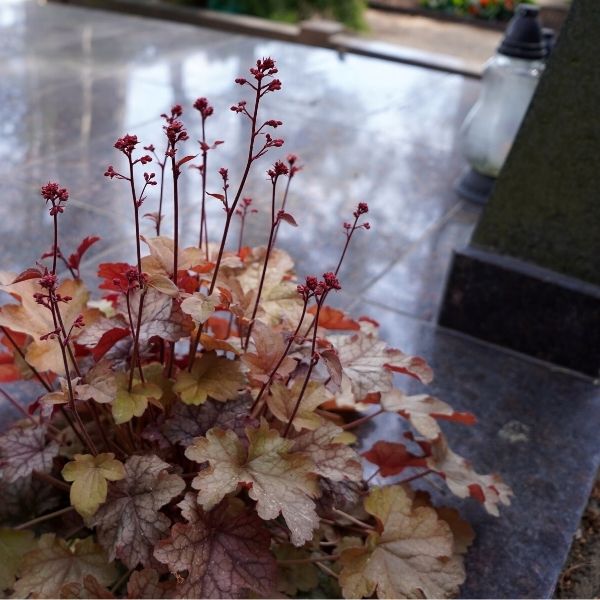
The lush, waving plants contrast with the smooth, shiny floor. Nice, but the effect is not in the rings at all, right? Authors of the project www.mckaylandarch.com
Below is a specific example: create an image of natural nature, shape three “layers of vegetation” (ardus): the first from trees, the second from shrubs, the third from perennial herbaceous plants. Choose olive trees (a straight trunk) instead. multi-stemmedinstead of compact bush forms – irregular free growth bushes.
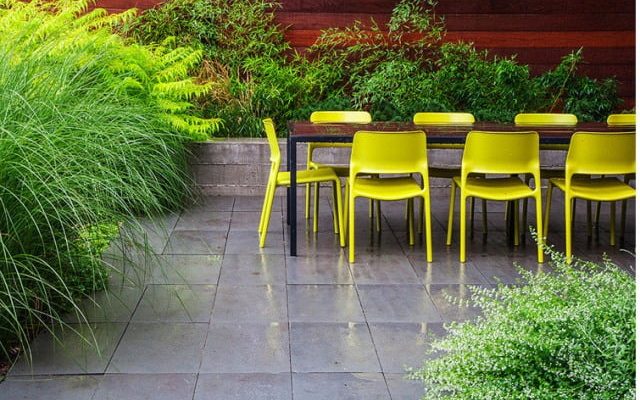
This illustration shows a fragment of a site designed by Chicago architects Mckay Landscape Architects, where homes made of copper, ipe and concrete are drowned in lush greenery. Basically, elements with different spatial shapes and materials look harmonious, although they contrast with each other. The next one in the photo is part of another project by the same authors.
Modern minimalism – this is another direction for your choice. Here you will find buildings, sidewalks, retaining walls, terraces, sculptures, benches and other small architectural elements more important than plants.
Strict forms extend into the environment: plants are also appreciated according to the shapethat they have or that can be donated (pruned) to them. Colors and rings do not play a decisive role here and the performance is created with plants in cubes, balls and other volumesintegrated together with the existing architecture in a single image. In principle, all the plants that are usually chosen for hedges are suitable for obtaining these shapes.
Thuja – plant already bored for the hedge, but it is so tolerant of shaping that we cannot ignore it. The most diverse shapes can be created from thuja, from rigid cubes several tens of cm high (for example by choosing the western thuja ‘Danica’) to a labyrinth of tall hedges (for example by the western thuja ‘Smaragd’).
In addition to conifers, there are wonderful deciduous trees that are worth choosing for a minimalist style garden. These are perfectly formed lanksvos (there are different color leaves), shiny bone (undemanding bush for a guaranteed result), boxwood (green even in winter, grows in the shade). If you need color, please ask with rhubarbtheir leaves range from bright lettuce to purple, choose the right variety. It is suitable for extracting higher volumes scribble. Its leaves are dark green and have a wavy appearance. The scroblo is not naked and bare in winter, because it retains some leaves to hang on the branches.
“Less is more” – this golden rule is followed by all followers of minimalism. Refined shapes, textures, colors – this effect can only be achieved by selection a small number of plant species. Those that are chosen must be well selected based on existing conditions, undemanding, resistant to temperature changes and diseases. HI plants, not scattered and lush, can help you realize your plot idea well.
latest posts published
Tired of working in the garden? What can be done to reduce maintenance
How to successfully transplant a Christmas tree
Landscaping a new plot: where to start?
What grows in clay: This is what worked on Juste’s farm
Organic seeds: are they worth paying more for?

Preventive spraying of tomatoes with homemade remedies –
Environmental management: how to renovate a bored plot?
Designers answer what are the 3 best plants for the garden

Fruit trees online: how I ordered them and how I planted them