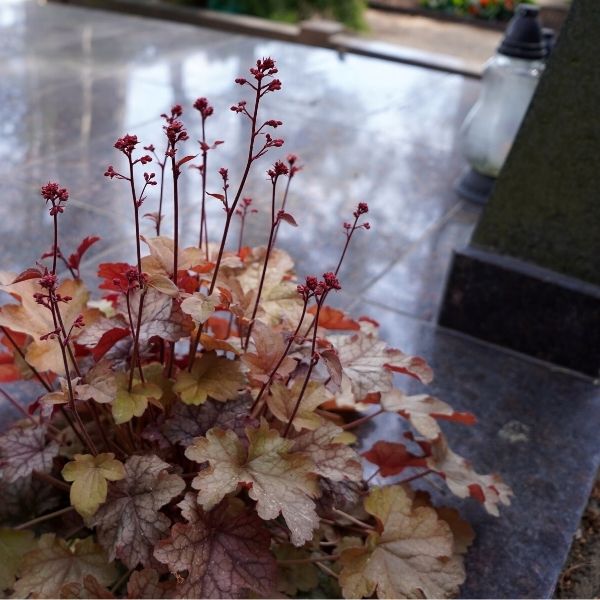
Landscaped graves make people’s heads spin. In the show “Here is my garden” a florist with many years of experience Rita Naujaliene from Prienai explained to us how to arrange the tomb tastefully, which decorative plants to choose and how to plan the landscaping of the tomb so that it requires as little time as possible, but at the same time is aesthetically pleasing.
Grave landscaping begins with a stone
Tomb beautification consists of several important elements. The first is a stone, without which we probably cannot imagine graves. Whatever stone you choose for the monument, large or small, square or round, this stone will dictate the environment that will surround it.
Pay attention to the shape of the stone, the shadow it casts and try to replicate it in the grave. For example, if the monument has the shape of a cross, it is possible to plant plants with the same shape.
This law is analyzed in more detail in the remote workshop “Grave Landscaping”. In it you will not only receive practical advice and design ideas, but also download a list of non-binding verified plants. The video seminar is hosted by Lina Liubertaitė and you can purchase it now and watch it immediately.
When choosing plants, also take into account whether they match the color of the monument. If we choose a light stone for the grave, we should also have light plants nearby. And vice versa: if the stone is black, choose dark plants to embellish the tomb.
The florist emphasizes that the design of the graves should not be dominated by many variegated colors. Try not to create sharp contrasts between plants and stone, their combinations should create a sense of seriousness.
It is better to choose perennials
Rita Naujalienė suggests changing the usual decoration of graves with begonias and geraniums. Perennial plants that do not require much maintenance. It is not necessary to choose only flowering plants for planting graves – it is important that they are durable, delicate and minimalist.
In Lithuania we can enjoy all four seasons, so plant plants that look aesthetically pleasing all year round. One of these plants is alum. Their leaves are of different colors, so it will be easy to find one that matches the shade of the monument.
Any plant that produces berries and reveals its beauty during All Hallows is also suitable for graves, for example, dogwood or lingonberry.
Bell plants can also grow in graves. Small clumps of bell-shaped plants, such as early sedge (Carex Caryophyllea) ‘The Beatles’, will look best. This perennial and undemanding plant grows like grass and gives the grave greenness and freshness.
You can order various bell plants from family farms Emedelyneto take home before visiting the tombs.
Another popular plant in cemeteries is calocephalus (lat. Calocephalus (Leucophyte) Brownii). Surely you know these silver bushes, often used in various plant compositions. In graves, combine them with a stone of similar hue to create an even deeper impression of tranquility.
Rita Naujalienė recommends planting ivy in the subheading, which loves shade and delicately covers the ground like a carpet.
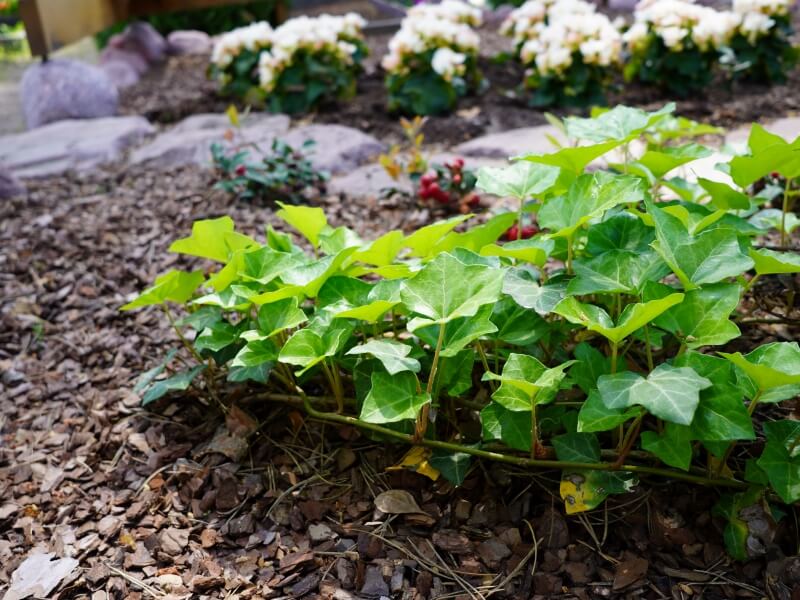
If you still want annual flowers, the florist recommends Schizanthus, which blooms with small flowers. This creeping plant is undemanding and looks extremely beautiful in graves.
Landscaping of graves – from another perspective
A grave can be covered with more than just concrete – think natural materials like pine cones. After all, we have so many gifts of nature around us, and we are still trying to buy tiles, pavers and slabs…
If the grave is located in an older cemetery with ancient pine trees, simply collect the pine cones that have fallen to the ground and place them on the grave. You can use them to fill empty spaces between plants or to create a mound or cross, whatever you want.
Do not be afraid of thorns, sticks or bark from trees that have fallen on the grave. There is no need to hide them, there is no need to create a too shiny, sterile tomb. Each grave is as much a part of nature as the environment around it, so it will be enriched by everything we get from it.
Briefly about the design of tombs:
- The space for planting plants must correspond to the shape given by the monument;
- Choose the color of the plants based on the color of the stone;
- Create calm, not contrast, with plants;
- Plant plants that will stay beautiful all year round;
- It is better to choose perennials;
- In a sunny place, turnips and shilokes are suitable;
- Use pine cones to fill the grave space.
latest posts published
Tired of working in the garden? What can be done to reduce maintenance
How to successfully transplant a Christmas tree
Landscaping a new plot: where to start?
What grows in clay: This is what worked on Juste’s farm

Organic seeds: are they worth paying more for?

Preventive spraying of tomatoes with homemade remedies –
Environmental management: how to renovate a bored plot?
Designers answer what are the 3 best plants for the garden
Fruit trees online: how I ordered them and how I planted them