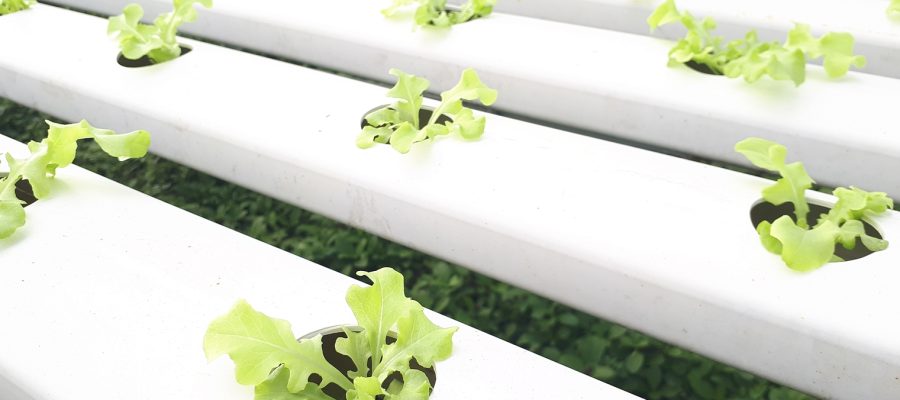
Have you ever heard of hydroponics? Maybe not, and that’s not a problem: this cultivation technique, still little known by the general public, may seem complicated just from the name. But what drives more and more people to abandon traditional methods to choose the hydroponic cultivationor without the use of land?
At first glance it might seem like a strange choice, but if there is a force that has always guided us, it is precisely there curiosity. She is the one who brought you here, to ask you: what is hydroponics? How does it work? And why is there so much talk about it in the world of plants?
Well, you are in the right place. In this article I will accompany you to discover an innovative and surprisingly accessible method for grow plants hydroponicallyeven at home. You will discover how it works, what its advantages are and why it could conquer you too.

Hydroponics: how does soilless cultivation work?
Hydroponics it is a technique of soilless cultivationincreasingly widespread among those looking for alternative methods to grow plants. Do you remember Tillandsias, those extraordinary plants that live without soil, absorbing humidity and nourishment directly from the air thanks to trichomes? Here, thehydroponics it doesn’t work exactly the same way, but it starts from a similar concept: the roots don’t sink into the earth, but receive what they need in another way.
No, I didn’t “get” my brains out (do you get the joke? Drank – hydroponics – water… ok, let’s forget about it 😅). Getting serious: the real difference is that in hydroponics plants grow thanks to waternot to the air nor to the ground.
The name itself suggests it: “hydroponics” comes from Greek hydro (water) e pono (work), or “water workBut be careful, it is not enough to immerse a plant in water to make it grow: hydroponic cultivation is a technical and precise process.
The soil is replaced by an inert substratethat is, a material that contains no nutrientsbut it only serves to support the plant and protect its roots. Between the most used substrates in hydroponics we find:
- Expanded clay
- Pearlite
- Coconut fibre
- Rock wool
These materials are perfect because they are light, draining and free of substances that could alter the nutritional balance.
But if the substrate is inert, where do the nutrients come from? Simple: from the waterenriched with specific nutrient solutionsusually based on inorganic compounds, designed to provide plants with all the fundamental elements to grow healthy and luxuriant.
Hydroponic systems: open or closed?
When it comes to hydroponic cultivationIt is important to know that there are two main ones water and nutrient management systems: I open systems hey closed systemsalso known as recirculating.
In open systemsThe nutrient-enriched water flows continuously and is drained after each pass. In practice, the plant always receives fresh nourishment and oxygenated, and the water used can easily be tap water. This system is simple to manage and reduces the risk of contamination.
In closed systemsinstead, the drained water is not eliminated but reintroduced into the circuitafter any filtering. This allows you to significantly reduce consumption and make cultivation more sustainable. However, water recirculation can make it easier disease transmission between plants, if the system is not carefully maintained.
Choose between open or closed cycle hydroponic systems it depends on the needs, the space available and the type of cultivation: both can give great satisfaction, as long as they are well managed.
What is the difference between hydroponics and hydroculture?
When it comes to cultivation without soilthe terms are often used hydroponics And hydroculture as synonyms. In reality, they indicate two very different approaches: one simpler and decorative, the other technical and suitable for intensive agricultural production. Let’s look at the main differences together.
What is hydroculture?
THE’hydroculture it is an easy and accessible method for growing ornamental plants at home, without soil. It is commonly used for houseplants such as spathiphyllum, pothos and dracaenathanks to its practicality and low maintenance.
- It is based on the use of containers with water and expanded clay.
- The roots absorb dissolved nutrients directly from the water.
- It is a stable system, requiring only occasional checks (thanks to water level indicators).
- Ideal for those who want cultivation clean and decorative in internal environments.
Hydroponics
- It’s a technical and controlled cultivation systemused in professional agriculture.
- Plant roots grow into nutrient solution or in inert substrates (coconut fibre, perlite, rock wool, etc.).
- Requires constant monitoring of pH, electrical conductivity (EC), oxygenation and nutrients.
- Allows maximum productivity in small spaces, even indoors with artificial lights.
- Used to grow vegetables, herbs, strawberries, etc.
In summary:
- THE’hydroculture is a simplified application of hydroponics, designed for the home environment.
- THE’hydroponics it is an advanced agronomic technique, suitable for intensive and professional production.
Why choose hydroponics? All the advantages of soilless cultivation
We’ve shed some light on what is hydroponics and how it works, but the question remains: why choose it? THE traditional cultivation in soil it’s a method that we know well and that has always worked… so why change?
If you’ve made it this far, chances are that curiosity has done its duty and I assure you that hydroponics has more than one good reason to be tried, at least once. Here are the main ones advantages of hydroponics:
- Cultivation everywhere: hydroponics makes it possible to grow plants even where the soil is poor, polluted or completely absent. It is ideal for urban spaces, balconies, greenhouses and closed environments.
- Space optimization: you can grow both horizontally and vertically, as in vertical farmstaking advantage of every available centimeter.
- Greater sustainability: especially in recirculating systems, the water comes reuseddrastically reducing waste. It’s one sustainable cultivation and also suitable for those who want to reduce their environmental impact.
- Total control over nutrients: By carefully choosing nutrients, you can customize the plant’s diet and improve the quality of crops.
- Fewer diseases and parasites: Without soil, the risk of fungal infections or insect infestations is much lower. Plants grow healthier and require less treatment.
- Freshest and local products: the practicality of hydroponic systems allows you to grow near points of sale or consumptionreducing transport and improving food freshness.
- Precise parameter control: pH, salinity and water temperature can be managed precisely, adapting the environment to the specific needs of the cultivation.
- Authentic flavour: contrary to popular belief, the flavor of plants grown hydroponically remains intactif not even improved by more targeted nutrition.
The disadvantages of hydroponics: are there any? Yes, but not for everyone
As in everything, even in hydroponic cultivation There are some less positive aspects to consider. Despite the numerous advantages, it is good to also know the limits of hydroponicsespecially if you want to tackle a larger scale project.
However, one important point must be clarified immediately: for home usehydroponics is a more than accessible solution and does not present major obstacles. The main problems emerge in industrial or large-scale hydroponic cultivationswhere organization and economic sustainability become determining factors.
Here are the main ones disadvantages of hydroponics:
- Higher initial costs: Installing a complete hydroponic system may require a higher initial investment than a soil grow, especially for professional facilities.
- Materials not always recyclable: Some components of hydroponic systems, such as plastic or synthetic substrates, are not environmentally sustainable or easy to dispose of.
- Clean water essential: Water quality is crucial. In environments with contaminated or hard water, a filtration system may be necessary, further increasing costs.
In summary: for a little one DIY hydroponic systemthese disadvantages are easily manageable. But if you are considering large-scale production, it is good to take them into consideration.
Hydroponics and Leonardo da Vinci: an all-Italian connection
Well yes. I didn’t decide to talk to you about hydroponics randomly. As you know, May falls on five hundredth year since the death of Leonardo Da Vinci. Every wonder could be said and told about that man, he is one of the personalities who most bring prestige to our beautiful nation. In short, Leonardo Da Vinci, the name alone makes the chest swell with pride, bringing to mind that that incredible genius lived under our sky and walked on our soil.
There is not a field in which he was not gifted, inventor, artist and scientist. You could trust that where he put his hands he would come out in style. But sometimes we forget another field of action: botany.
Exact, Leonardo Da Vinci was also a predecessor of modern botany and, among the many that he studied, there was hydroponic culture. He was able to understand the mechanism that led the water to rise through the roots until it completely sprayed the plant. He also did an experiment in this regard: he took a plant, removed it from the earth and placed it in water. He was thus able to observe that the plant continued to grow, albeit more slowly.
Leonardo believed botany to be an unparalleled work of art, we couldn’t agree more!
latest posts published

Tired of working in the garden? What can be done to reduce maintenance
How to successfully transplant a Christmas tree
Landscaping a new plot: where to start?

What grows in clay: This is what worked on Juste’s farm
Organic seeds: are they worth paying more for?
Preventive spraying of tomatoes with homemade remedies –
Environmental management: how to renovate a bored plot?
Designers answer what are the 3 best plants for the garden
Fruit trees online: how I ordered them and how I planted them