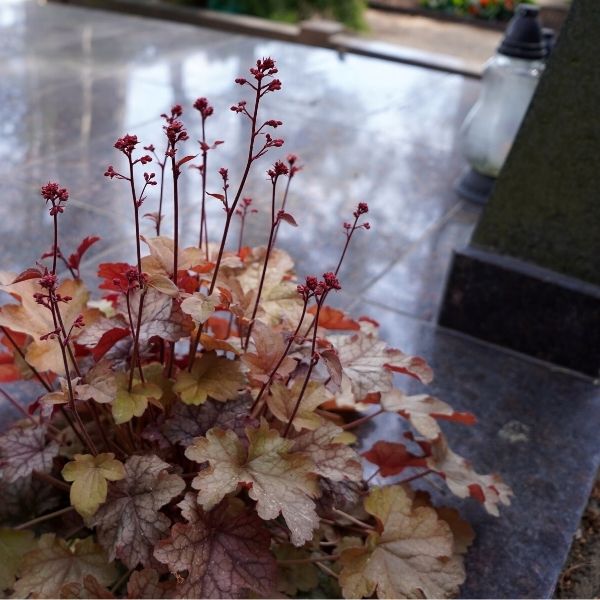
Today we return to take a look outside to continue the topic we discussed in the last episode of le Geo Uni, do you remember it? If the answer is “no” please fix it immediately!
A few weeks ago we explained why in autumn the colors of the leaves change, turning towards yellow, red and many other shades so characteristic of this season. Now, however, as I promised you, let’s understand the following point: why do the leaves fall, after changing color?
Leaf abscission
Calm down, we don’t want to use big words, but “leaf abscission” is the technical term that indicates the simple fall of leaves from the branch of a tree. It is a phenomenon that concerns a very large group of plants, which are defined as “deciduous” or “deciduous plants”..
In this way we underline the distinction with evergreen plants which never undergo periods in which they are completely deprived of their foliage. Also evergreens renew their leaves, but they do so continuously and parallel to the emission of new leaves. So a fir might seem nice and green to you with the same needles, but in reality if you look at the base of the trunk you can see that many are resting on the ground, this is precisely because there is a continuous movement that alternates the old leaves with the new ones.
Deciduous plants are concentrated in the temperate zones of our planet, while in the tropical zones we find plants that have an evergreen habit, this is because in that part of the globe the hours of light are always the same, remaining almost unchanged throughout the year.

In the polar areas we still find evergreens, especially conifers that thrive where the climate allows them. Surely in these latitudes it is not the abundant light that allows them to always remain adorned with leaves, but rather the small stratagems that we will see later.
Why do plants lose their leaves?
As we saw in the last lesson of the Georgics University, during autumn the hours of light decrease, the chlorophyll stops being produced and what is present inside the leaves degrades and this pigment therefore disappears for the benefit of others. There are further mechanisms that are triggered within the plant as the days get shorter and temperatures gradually get colder.
For the plant, maintaining its foliage during the winter is a fairly risky investmentobviously the tissues of the leaves, after having worked from spring to autumn, are worn and should still be changed, this is a process called senescence, aging.
Furthermore, by evolutionary endowment, plants try to reduce as much as possible the surface area exposed to the adversities of the cold season, therefore they try to eliminate as many unnecessary elements as possible so as not to have to carry an excessive burden during the frost months. Frost which could damage the leaf blades, even causing the cells of these tissues to explode. And this is why I told you before that the majority of conifers, needle-leaved trees, have transformed these leaves into thin, very leathery needles which, at the same time, are not very expensive to maintain during the cold season precisely because of their small surface area. Last but not least, maintaining a large canopy for the plant could mean offering the snow an additional surface on which it can accumulate and this would lead to a burden on the structure of the plant with the consequent probability of fractures on the woody parts.
The evolutionary stratagem
All this to make us understand why deciduous plants, during their evolutionary course, have organized themselves by deciding that in winter they will face dormancy, a sort of hibernation in which they reduce their functions, surviving using the energy accumulated as reserves. Therefore, when winter hits, the plants begin to recall the still reusable substances (nutrient substances, especially carbohydrates) that are inside the leaf blade, these substances are recalled inside the stems, passing through the petiole, they exit the blade entering the inside of the plant and are accumulated at the level of reserve tissues which can be in the wood of the branches, in the buds and in the roots.
Once it has been possible to reabsorb all the energy that could be taken from these leaves now devoid of any function, the hormone Auxin intervenes which allows the plant to begin to form a scar between the trunk and the surface of the leaf. The scar, formed with the suberines, is a sort of suberified scar that acts like the closure of a hatch, completely isolating the surface of the plant from the leaf, which in turn cannot help but fall to the ground.
The suberified scar also offers a barrier to the entry of any pathogens into the plant. So the worst thing we can do is prune the plants before they have completely lost their leavesbecause we would interrupt that process of reabsorption of the nutrients that the plant will then need to overwinter and start again once spring arrives.
latest posts published
Tired of working in the garden? What can be done to reduce maintenance
How to successfully transplant a Christmas tree
Landscaping a new plot: where to start?

What grows in clay: This is what worked on Juste’s farm

Organic seeds: are they worth paying more for?

Preventive spraying of tomatoes with homemade remedies –
Environmental management: how to renovate a bored plot?

Designers answer what are the 3 best plants for the garden
Fruit trees online: how I ordered them and how I planted them