A garden on the roof of a house is an opportunity to create a green space without using additional surface area, so this idea is already very popular in crowded big cities of the world and, it seems, is gradually catching on in Lithuania too. Opened to visitors more than a year ago in the center of Vilnius, the “Live Square” terrace allows you to be surrounded by nature and literally rise above the hustle and bustle of the capital. Such an unusual project requires a lot of knowledge, creativity and unconventional solutions, which we talked about with landscape architect LinusŪs, together with „Terrafirma LT“ who created this garden of impressive beauty:
Read on and you will find out what challenges the project implementation team faced, what solutions worked and what didn’t, what plants Lin chose to create a harmonious image of nature and the city skyline.
Challenges and solutions
A garden on the roof of a house is, first of all, an engineering and technical puzzle, so when the project began several challenges were encountered:
1. Quantity of land. To plant and grow trees it was necessary to ensure that their roots had enough space to grow, so terrace builders and landscape architects had to turn their heads to find the most suitable solution. The result of joint work is that cavities 15 cm deep are installed in the roof for pouring soil, and mounds of earth about 75 cm high are formed on top of them, on which trees and bushes are planted. True, Linas admits that in the future he would avoid such steep hills, because rain and snow, however, wash away the soil – even carpet plants planted around the hills do not protect from this. An alternative could become raised beds or raised flower pots: they can not only create an elegant geometry of the garden, but also protect the plants from washing away the soil.
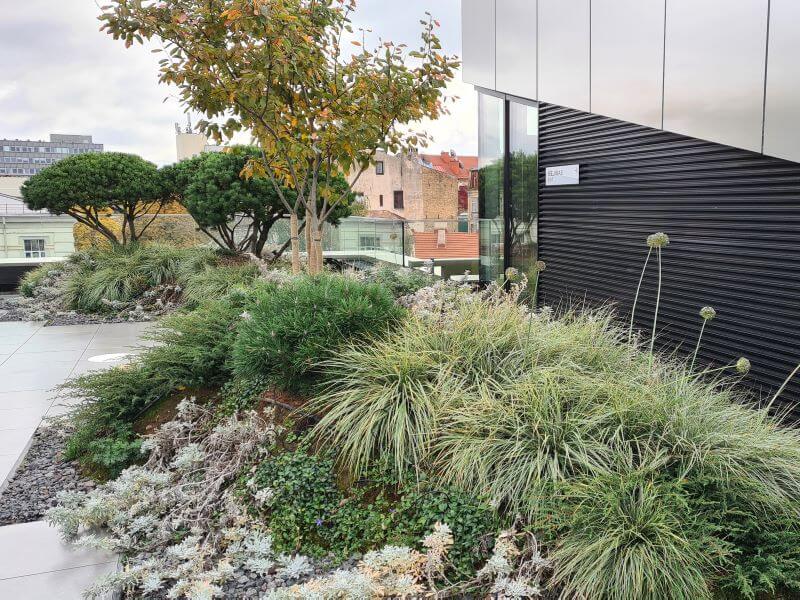
2. Strong wind. The exposed terrace is exposed to the wind from all sides, so it was necessary to find a solution to protect the plants from its damage. The trees were fixed to special structures installed on the roof of the terrace. In this way they grow stably, resist various climate changes and the changing season
3. Water drainage and weight distribution. The “Live Square” terrace was created paying close attention to the drainage system: the water from the formed hills drains into the valleys created in the ceiling, which are not even visible under the roofing of the terrace. Whether the water will stagnate, whether the wet ground will not become too heavy and whether the roof structure will be able to withstand it, this must be calculated very precisely before installing a suitable and durable roof covering. So, if you’ve always wanted to install a garden on your roof, unfortunately you won’t be able to do it without a special plan. On the other hand, you can always create a mini garden on your terrace or balcony, and if you run out of ideas, visit the courses organized by us “My balcony design” – Click hereto find out more about them.
Roof plants in harmony with the city skyline
In creating this terrace, Lin wanted a harmonious view of the plants and the city, which is why he rejected a brightly colored flowerbed, which could distract and irritate the observer’s eyes. The large terrace has been equipped with more massive plants to create a feeling of intimacy and space. Furthermore, the goal was to make the terrace modern, elegant and change with the seasons, which is why two types of plants were chosen: trees and carpet plants.
The trees became the structural plants of the terrace:
– Lamarco medlievoswhich bloom beautifully in spring and turn orange in autumn;
– Winged goblinsspectacularly decorating the space in autumn, when they turn bright red;
– Mountain pine bonsaiallowing you to create the impression of a green roof even in winter.
To cover the mounds of filled soil and to diversify the vegetation, carpet and flowering plants are planted:
– Junipers;
– Dwarf pines;
-Viksvos;
– Cold;
– Chives;
– Decorative garlic
A beautiful terrace for a long time: how to make it?
What needs to be done so that the garden on the roof of the house remains beautiful for many years, the plants are lush and pleasing to the eye? Lina named the two most important factors:
1. Plant resistance. The plants must be perennial, adapted to our climate and must be in harmony with each other. You can create a stylish, year-round green space on your balcony or terrace by planting potted perennials. By the way, you can turn ordinary pots into smart pots with a watering system with your own hands: how to do it, read here.
2. Supervision. It must be permanent and complex: it is necessary not only to weed, but also to monitor the plants, react to their changes, if necessary, change the places where the plants are planted. The garden is alive, so you need to take care of it every day.
We thank LinusŪs, who told us the details of the creation of this terrace and showed us how the beauty of nature can reveal itself in the most unexpected places. If you haven’t had time to visit the “Live Square” terrace, be sure to do it: it is located in Vilnius, Gediminos ave. 44a and can be visited all year round. There is a restaurant here, so you can have lunch surrounded by the beauty of the capital’s roofs and plants, or simply escape from the city routine and enjoy the peace of the greenery of the garden.
latest posts published
Tired of working in the garden? What can be done to reduce maintenance
How to successfully transplant a Christmas tree
Landscaping a new plot: where to start?
What grows in clay: This is what worked on Juste’s farm

Organic seeds: are they worth paying more for?

Preventive spraying of tomatoes with homemade remedies –
Environmental management: how to renovate a bored plot?
Designers answer what are the 3 best plants for the garden
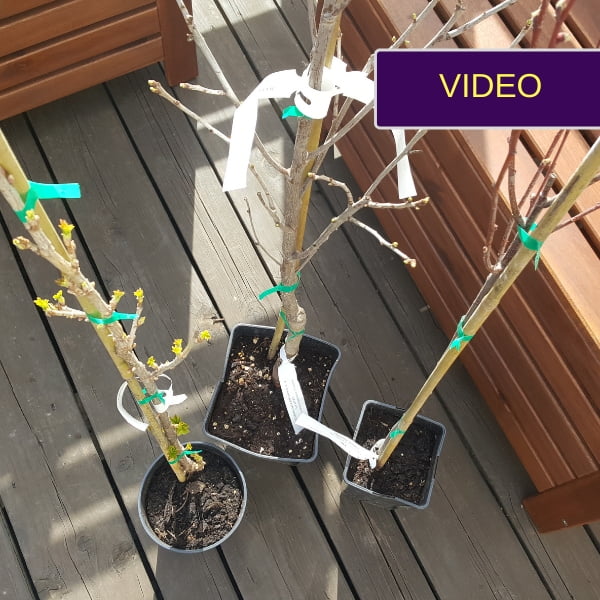
Fruit trees online: how I ordered them and how I planted them