Every year the Pantone Color Institute announces the color of the year, which we then find in make-up palettes, fashionable interiors, car accessories, haute couture catwalks and everyday clothes. Designers of various fields pay attention to this color, which, of course, does not ignore the plant world either. Also, the color of the year 2017 is very much about nature, so we will look for ways to use it beautifully in your garden. Read on for plant tips and photos.
WHAT IS THE COLOR OF THE YEAR 2017
The color of the year 2017 is Green. These are calm, gentle tones of green, replacing last year’s duet of colors: rose quartz and azure blue.
It does not have a rich leaf color at all (like ivy leaves), it is not a bright lemon (like Thunbergia ‘Aurea’). Although the color green is said to be calming, the tone chosen by fashion dictators is extremely calm, gentle, even. Maybe even boring.
Of course, the arrival of green in the Olympus of fashion is welcome because the ideas of naturalness and nature are advertised, encouraged and appreciated. After all, there is a whole philosophy behind choosing the color of the year. It’s nice that there is more greenery in cities, in apartments, in offices and in everyday life. Sometimes it will be just a color solution, sometimes it will be an actual plant. The more plants there are, the healthier the environment will be.
The easiest color to implement is green within – this year the Internet is full of photos of beautiful interiors with plants.
Add some new houseplants to your room and you will be trendy.
SIMPLE AND COMPLEX AT THE SAME TIME
Recruiting “green” to your yard is a little trickier. On the one hand, all vegetation is green, so your garden automatically becomes a fashionable place if there is even a small patch of grass, if even a currant bush grows there.
On the other hand, you will not be saturated only with greenery. Inexpensive in earlier years: If you just want to add a trendy accent, plant annuals with flowers of that color and you already have the result. In 2015, the color “marsala” reigned: there are many plants with flowers the color of pale red wine. In 2016, pink and blue dominated and these flowers can be easily grown (read the colors of 2016 here). And what is interesting to invent with green?
If you dare to experiment with the shape and texture of plants, this year can be a year of discovery. You will feel that green can be subtle and intriguing rather than boring.
HOW TO COMBINE GREEN WITH GREEN
In the absence of bright colors, height, shape and texture play the first role. Imagine how different the details of this outfit would be, even if they were all black: velvet jacket, silk blouse, woolen trousers, leather shoes, umbrella, lace, flowing dress, shiny belt buckle, patent leather shoes.
Green plants can be equally diverse: rough, soft, waxy, spiky, translucent, smooth, bristly, finely shaped, veined, cut, with brooms, prickly.
Some call these properties texture, others texture. Let’s not argue about the term, the main thing is that all this beauty is revealed better when it is not overshadowed by bright colors. Therefore, feel free to plant plants of the same color but with contrasting textures together.
For example, in the shade, plant fleshy blueberries next to small-leaved boxwoods, and in the sun – dense and fluffy woolly notrus next to graceful, almost translucent blueberries.
A solid color allows you to focus on other things that create contrast. Therefore, do not be afraid that the green corner in the yard will be boring – simply choose plants of different heights and shapes.
Landscape architect Lina Puodžiūtė, landscaping course “My garden project“, the teacher suggests not to be afraid of the dominance of green even in vases.
He suggests paying attention not only to interesting decorative herbs (for example, sedge, Latin Scirpus), but also to herbs that are also fun to grow at home on the windowsill.
GREEN FLOWER PLANTS
But let’s get back to planting flowers. Can they be green? Yes, it can, but it will not be a pure color, but various shades of green. Sometimes these flowers can also be supported by leaves, for example kind rasakila during flowering it is abundantly covered with yellow-green flowers, which from afar look like bright curly leaves.
One of the first spring flowers with greenish flowers – primrose ‘Franceska’. This undemanding beauty appears very early and begins to bloom as early as March or April. Of course, if you don’t confuse flowers with leaves and don’t notice this beautiful phenomenon.
You can definitely find it echinacea (lat. Echinacea), blooming with white-green or yellow-green flowers, for example ‘Coconut lime’, ‘Green line’.
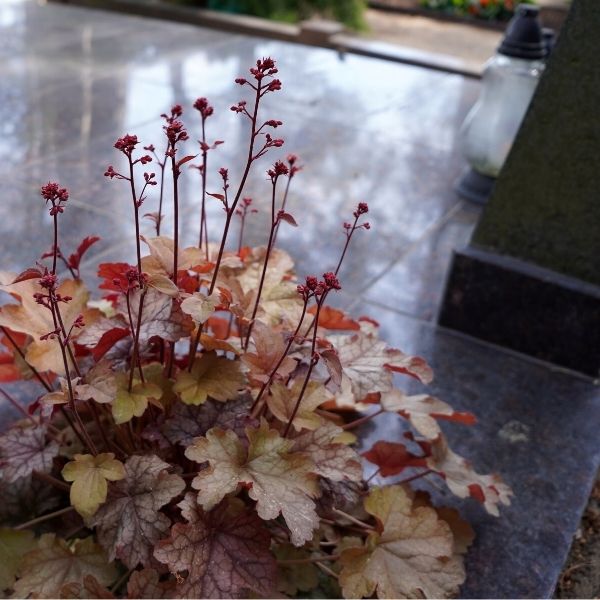
Shade-loving plants rarely have large, large flowers, but this is where we can often find decorative foliage and small, bright flowers. L. Puodžiūtė mentions alums (lat. Heuchera) – for example the alum ‘Apple Crisp’, which releases lighter vertical inflorescences from the association of green leaves.
The specialist recommends paying attention to the interesting ones flowering bushesthat bloom white or with a green tint.
This Stefanandra Karpytalape ‚Crispa’ (bending branches and little flowers), Hydrangea lamp ‘Annabelle’ (the rings are initially greenish, then become white).
latest posts published
Tired of working in the garden? What can be done to reduce maintenance
How to successfully transplant a Christmas tree

Landscaping a new plot: where to start?
What grows in clay: This is what worked on Juste’s farm
Organic seeds: are they worth paying more for?
Preventive spraying of tomatoes with homemade remedies –
Environmental management: how to renovate a bored plot?
Designers answer what are the 3 best plants for the garden
Fruit trees online: how I ordered them and how I planted them