We always expect colors from the flower garden. However, when everything blooms, sometimes you have to admit that the wishes are nothing more than a daisy. Some plants have bloomed earlier, the shade of other flowers is not the one drawn on the package, and still others seem out of the general context of the flower garden. You may not replant the ones that are blooming now, but next time pay attention to some important things to make your flower garden harmonious.
FLOWER COMBINATIONS: TIGHTEN THE COLOR
Many colors are a challenge. You like bright colors – controlling them is even more difficult. Artists can break the rules and create incredibly beautiful plant combinations, but they also pay attention to tones, shadows, openwork, wind effects. Hobbyists don’t need to learn to break the rules, they break them anyway, experimenting for fun. Therefore, it is worth knowing at least the basic rules so that the flower garden is harmonious and not chaotically variegated.
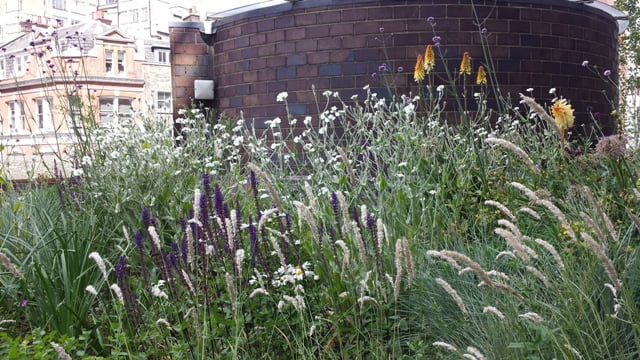
An easy way to fix it is reduce the number of colors. Choose two or three colors and try to keep in the flower garden only those plants that bloom in the colors you have chosen. The proposal is very simple, but difficult to implement. Not because you won’t push plants of your color, but because it will be difficult to give up flowers of other colors that you also really like.
For example, if your flowers combine with blue and yellow dominants, plant bluish bloom catnip, marigold, gojian sage, cinquefoil, fennel, asters and yellow bloom daffodils, daffodils, whiteheads, sunflowers, rudbeckias. However, for the sake of a bright red rose, hold back, because it unbalances the whole harmony.
How to choose color and why it is necessary, landscape architect Lina Puodžiūtė will tell you during the inspiring conference on environmental design.Garden style”, which will take place at the end of August.
MOVE UNSUITABLE SYSTEMS TO ANOTHER LOCATION
If your flower garden is now too variegated, the flower combinations seem incomplete, the colors seem excessive – think Which color could you give up?and you will see that in this way the image will become much tidier. Don’t be afraid to remove bright colors (red, yellow, hot pink) – it’s not necessary remove everything, but you have to decide which will remain as primary. If bright colors are used incorrectly, errors are more noticeable.
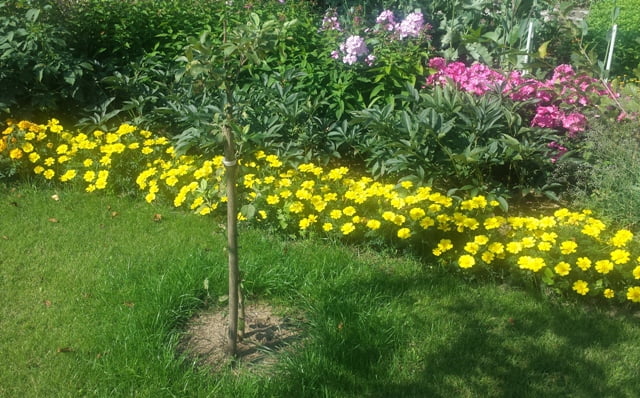
The same applies colorful foliage for bushes. If you have already chosen a bright lemon barberry (Berberis Thunbergi ‘Aurea’), remember that it will be bright all season. Its active color takes up a lot of space, so a peony with large pink flowers growing nearby would probably make a suitable company. You will look and not understand which of them is the leader here. If you move the peony to blue, purple friends or if you move it against the background of green leaves, the harmony will be perfectly preserved. And choose another, quieter company for the helm.
It’s even more complicated with pretentious colors. For example, if you have a flower garden dark purple flowers (such as some varieties of tulips, carnations, shillocks) or leaves (like the snowdrop ‘Diabolo’ or the European downy ‘Royal Purple’), this color is often combined with yellow. But bright purple with bright yellow – yeah a step towards a screaming flowerbed. Try moving the bright yellow ones to another place and leave only slightly yellowish, preferably completely white, plants next to the bushes with purple leaves. Don’t confuse red with blue here anymore.
INCREASE QUANTITIES
Narrow the color scheme, give up some plants… So what fills these gaps? With the same plants you already have. Multiply them and plant more. Largest areas of a species it seems much more effective than many plants of different varieties planted one by one.
Choose those plants that have already proven themselves well in your flower garden: they are healthy, they grow well without special care and you like to see them. When there are more of these plants, your flower garden will look even more beautiful and require less maintenance.
Grow the plants you will propagate in groups in the flower garden and repeat them in other parts of the plot. This will create stylistic integrity throughout the area.
DON’T BE FASCINATED BY MIXTURES OF DIFFERENT COLORS
The question then is: to whom are the seed packets sold mixed with different colored flower seeds? For example, marigolds of various colors (also called zinnias), Chinese circles (also called asters), large-flowered purslane, etc. Please note that in this case the flowers have something in common, that is, in the package there are the same flower seeds, only the colors are different. Since the plant is the same, the shape, height, color and texture of the leaves, the size and shape of the inflorescence are repeated. The only difference is the color – that’s why it’s nice to look at such a daisy. If you create a flower garden from a mixture of only one type of plant and do not confuse other plants, the result will be beautiful. However, if you try to replicate a similar color scheme in another flower garden, where several varieties of different plants grow, there will already be chaos.
The advice would be this: some element must connect, repeat itself. If you grow different plants, let them blend together by repeating colors.
If you grow many plants of the same type, their colors can be completely different. Since flowerbeds are usually created from multiple seed packets, it would be best not to get carried away with seed mixes.
HOW TO GUARANTEE THE COLOR
There are more risks with annual flowers. It is difficult to print on the package the exact color of the flower that will grow from those seeds. Pink cosmea and pink black seed may look like similar colors on the package, but once grown you will find that the colors do not match at all.
Additionally, some plants tend to “borrow” color from stronger neighbors. Tulips and gladioli, which grow from bulbs, can also change color and therefore go outside the color scheme you have designed.
It is more reliable with perennials if you purchase them with a clearly named variety. Certified varieties cost more, but you can claim quality and guarantee. Perennial flowers are a bigger investment, but they last a long time. Also, there is less work with perennials.
FALL IN LOVE WITH GREEN
And finally, don’t expect the flower garden to be full of color. Global ecological trends revolve around the fact that we should enjoy being part of nature. OH natural change – one of the most important and interesting processes.
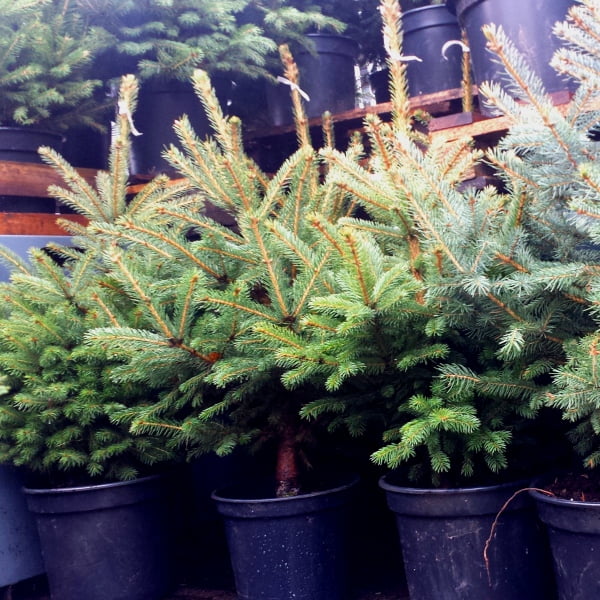
Therefore, the small compact pines and firs, so loved by Lithuanians for their constant greenery all year round, are increasingly considered static and boring. They are replaced by perennial flower beds in which you can clearly see when it is spring, when summer, autumn and winter.
While the spring flowers bloom, only the green foliage of the other plants still growing can be seen. When summer arrives, other flowers take center stage, while spring flowers turn green or disappear completely until the following spring. In autumn, other plants dominate again and the others, which flowered earlier, abandon their important position. Thanks to this change, the flower garden is not only boring, but also maintains a sufficient balance of green foliage.
Keep in mind that flower beds made with annual flowers are usually chaotic and too variegated, especially if many different bright colors bloom at the same time. Perennial flower beds usually have a more stable balance between green and other colors, which makes flower combinations more harmonious.
latest posts published

Tired of working in the garden? What can be done to reduce maintenance
How to successfully transplant a Christmas tree

Landscaping a new plot: where to start?
What grows in clay: This is what worked on Juste’s farm

Organic seeds: are they worth paying more for?

Preventive spraying of tomatoes with homemade remedies –
Environmental management: how to renovate a bored plot?
Designers answer what are the 3 best plants for the garden
Fruit trees online: how I ordered them and how I planted them