The “Spritz” topic might seem trivial at first glance. After all, putting water in wine is not a great discovery at all. Water has been present on earth since the beginning of the world and wine was the delicacy of early civilizations. Surely around that moment we should look for the moment in which the two ingredients met.
But we had no intention of delving into the mists of the times, but only of identifying the appearance of the syringe, as we know it today. According to some researchers, Germans and Austrians punch each other in the chest, judging the authorship of this concept. They also have arguments in favor of claiming to have the birth certificate of the spritz, as etymologists trace its origin to the German “spritzer” (to spray, to water), which appeared in the 19th century as a way to create “sparkling” wine.
Some local sources and legends place the spritz either in Germany or in areas of the Austro-Hungarian Empire, or in Italy but also in Greece or Ancient Rome. After all, “The truth is only in the wine/An old Latin proverb says…”
Hungarians also have their own spritz history. It seems that in the year 1842, the Hungarian writer András Fáy invited a group of close friends to visit his new cellar, including the scholar Ányos Jedlik, who brought with him a bottle of mineral water, the newly invented drink. The two thought of mixing the drinks and thus the first fröccs, the Hungarian name for spritz, were born.
The first attestations in the vocabulary of the Romanian language date back to around 1900 and it is believed that the term entered the current language together with the typically Austrian waiters and restaurants in the Bucharest of those times. In other words, the first Romanian city conquered by the spray was Bucharest.
Let’s not even try to imagine what Romanian humor would have been like if the spritz had been known in our country at the time of Caragiale, given that this drink penetrated the Myoritic lands, accompanied by a whole series of controversies.
Although the mixture of wine and soda is known throughout the Central European area, it must be said that few European peoples have got into the habit of consuming this drink, and the name appears only among Romanians and Italians.
The perfect choice for a hot summer day
Traditionally, the spritz was prepared with wine and cold mineral water, in a mixture of equal parts, served in a wine glass without ice, but over time each country adapted it as best it knew how. Being easy to prepare and eatthe spritz quickly spread throughout the world of wine drinkers, and the original recipe was modified countless times depending on the habits or needs of those who consumed it.
On the other hand, orWinemakers and sommeliers are of the opinion that wine should never be mixed with water and that water should only be served with wine. From It is believed that “spritz” sacrifices wine. They are the specialists who are passionate about showing us that every type of wine says something. If you added water or anything else, I suppose you would dilute the message. Expert sommeliers recommend only natural water around the wine, so as not to ruin its properties, aroma and smell.
But every argument is there to be fought. If specialists compare the spritz to the flute in church or to a famous painting, which is modified with the carioca, the evolution of society clearly shows us the fact that the spritz has become a subject of urban culture. Although it no longer enjoys the greatness it once knew, this drink is changing and adapting to the world we live in.
The soda of the past has been joined by quality mineral waters, with various degrees of mineralization, suitable for the nobility of the wines they are paired with. And wines, in their journey of perpetual rediscovery, have co-opted new qualities and properties that delight consumers.
Refreshing and light, the spritz is suitable for any occasion!
Somewhere in the world the concept of “spritz in a can” was also invented, suitable for beach parties, picnics and outdoor concerts. This energizing and refreshing drink is popular in countries such as the USA, Australia or Great Britain, but is gradually making its presence felt in Europe too.
In other words, the spritz has become a long-distance drink, it has adapted to the times, and now we perceive it as an opportunity and reason for socialization. Modern versions of the classic spritz have appeared, ready to contrast sparkling wine or the various best-known cocktails. Specialties such as rose spritz, flavored with lavender syrup, or white spritz with elderberry syrup have become well-known in some wine shops in Europe.
Since summer is already in full swing, thoughts turn to the beach, the swimming pool, the terrace or a picnic, with the people closest to you, and what is better in this context than a glass of spritz, instead of the usual beer? Refreshing, light and elegant, the spritz is also suitable for concerts, outdoor parties or festivals, so we can say that it is a versatile and handy drink.
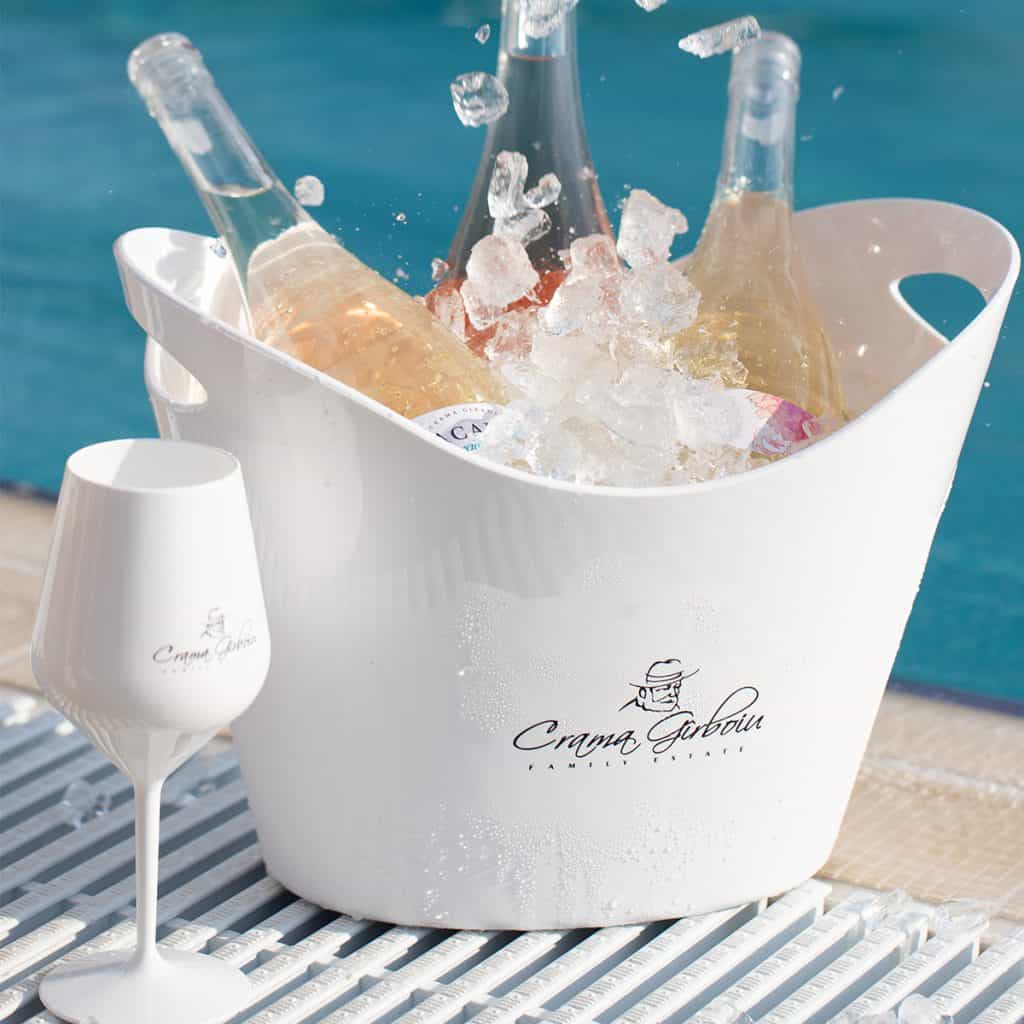
How to get a perfect spritz?
A good spritz is prepared with mineral water with a high carbon dioxide content (classic or strong), such as calcium and/or magnesium bicarbonate and an average quantity of minerals, respectively fixed residue between 600 and 1600 mg/l). 70% of the syringe is water. In our country the most popular spritz is the one consumed in summer, which, say the sommeliers, includes 1/3 dry or demised white wine and 2/3 carbonated mineral water.
Of course, we won’t dilute the oldest and best wine in the cellar with soda. The truth is that there is a category of wines “easy drinking” which fit perfectly with the spirit. White or rosé wines, specifically designed to be consumed year after year, are more than suitable for this pairing. Dry wines are also recommended or demiseci since the barricaded or liqueur ones are not consumed in mixtures.
For a memorable experience, we can indulge in a real war of the senses and discover the flavor of a Premium spritz, based on the Bacanta Special Edition package from Cantina Gîrboiu. And if the price of the tasting experience also counts in our summer equation, Livia wines are certainly the best choice.
We don’t give up on the spritz, and the perfect pairing is what we like: a fresh, fresh and quality wine, white or rosé, and a quality mineral water. Plus, good mood and loved ones can contribute to a perfectly refreshing spritz served on dry summer days.
latest posts published

Tired of working in the garden? What can be done to reduce maintenance

How to successfully transplant a Christmas tree

Landscaping a new plot: where to start?

What grows in clay: This is what worked on Juste’s farm
Organic seeds: are they worth paying more for?

Preventive spraying of tomatoes with homemade remedies –
Environmental management: how to renovate a bored plot?
Designers answer what are the 3 best plants for the garden

Fruit trees online: how I ordered them and how I planted them