At first glance it seems like a contradiction: wine without alcohol? But behind this apparently paradoxical formula lies a global trend that is gaining more and more courage in Romania too. What does non-alcoholic wine really mean? Who drinks it, how is it made and, above all, why choose something like this in a country with such a strong winemaking tradition?
Let’s find out together.
What is non-alcoholic wine?
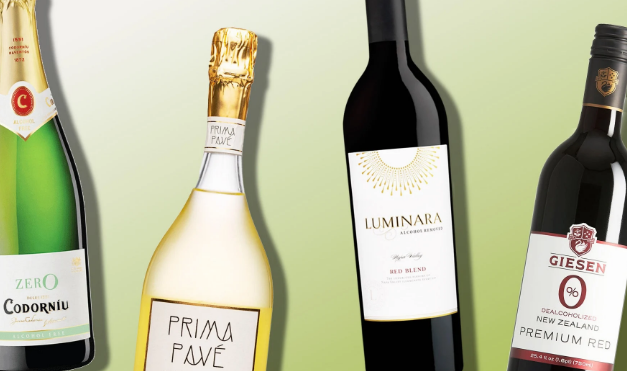
Non-alcoholic wine is not just grape juice. It is a wine in all respects, obtained by fermentation, just like any other wine, except that, at the end of the process, the alcohol is eliminated (or significantly reduced) using specific techniques. The result? A drink that retains the specific aromas of wine, but without the effects of alcohol.
It seems like a new idea, but the reality is that non-alcoholic wine has a history that begins in the 20th century and has refined considerably in the last 10 years.
Why is non-alcoholic wine increasingly sought after?
The answer is simple: because people’s lifestyles have changed.
Consumers are increasingly careful about what they put in their glass, about the balance between pleasure and health, and global trends support this wave of conscious consumption (drink consciously).
Non-alcoholic wine is the ideal choice for:
- those who lead
- people with health problems who are prohibited from consuming alcoholic beverages
- pregnant or breastfeeding women
- active people who want to avoid the effects of alcohol
- or simply those who want to enjoy a carefree glass of wine.
On Google, phrases like “alcohol-free wine”, “non-alcoholic white wine”, “non-alcoholic red wine” OR “alternative to traditional wine” they are increasingly sought after. It is no longer a curiosity: it is a consumer reality.
How to produce non-alcoholic wine: technology, precision and balance
To obtain a wine like this It tastes like wine, but without the alcoholit is not a simple task at all. The main challenge is loyalty aromas, structure and flavoureliminating or reducing alcohol, one of the essential elements of classic wine.
This is why wineries that choose to produce non-alcoholic wines invest cutting-edge technologieswhich allow this delicate separation. Here are the most used methods internationally:
1. Low temperature evaporation (or vacuum distillation)
This method assumes heat the wine in a controlled system where the pressure is reduced (partial vacuum) therefore evaporate the alcohol at a much lower temperature than normal (below 30°C).
Advantages:
- It is one of the most technologically accessible methods.
- It can also be applied on small batches.
disadvantage:
- Some of the volatile flavors are lost with alcohol.
- The taste can become flat if the final composition is not carefully corrected.
2. Reverse osmosis
It is more advanced technology that it uses semipermeable membranes through which the wine is filtered under pressure. Basically, small molecules (like alcohol and water) are separated from large ones (tannins, anthocyanins, aromatic compounds).
steps:
- Filter the wine and obtain an “aromatic base” without alcohol.
- The alcohol is eliminated from the separated liquid part.
- The components are then combined to reconstitute the non-alcoholic wine.
Advantages:
- It preserves the flavors and structure of the wine very well.
- It is a delicate method that does not involve high temperatures.
challenge:
- High equipment and maintenance costs.
- Requires experience controlling filter parameters.
3. Column with rotating cone
This is a leading method used by major international manufacturers. It uses a vertical column with rotating conical disks and a vacuum extraction system.
The process takes place in two phases:
- In the first phase they are extracted volatile aromaswhich are collected separately.
- In the second phase, the alcohol is eliminated and then the aromas are added again to the de-alcoholized wine.
Advantages:
- It keeps the delicate aromas of the wine intact.
- Provides total control over your alcohol level.
disadvantage:
- It is one of the most expensive technologies.
- It is mainly used for large volumes and export wines.
4. Alternative/hybrid techniques
In addition to the established methods, there are also hybrid solutions that are combined vacuum, filtration, added CO₂ for freshness or even aromatic rebalancing with natural extracts. They are still in the development phase but promise interesting results, especially for young, fresh or sparkling wines.
What really matters?
Regardless of the method used, the quality of the base wine is essential. You can’t get a good still wine if you don’t start with a quality wine. Equally important is the final balance: acidity, body, aroma, aftertaste.
Producers who manage to create a Non-alcoholic wine with personality there are those who treat this process not just as dealcoholization, but as a complete winemaking with a different purpose – offer a genuine, uncompromising alternative.
Who drinks wine without alcohol?
Perhaps the first impression is that non-alcoholic wine is reserved only for those who don’t drink at all. But the reality is more complex.
Many choose it:
- at lunch, in the office
- in the evening as a healthy alternative
- during detox periods
- during pregnancy
- at events where socializing is important, but alcohol… is not
In short, it is for those who do not want to give up the ritual of wine, but want to avoid the effects of alcohol.
Is it better? Worse? Deserve?
As with any question of taste and habits, the answer is: it depends.
Non-alcoholic wine is not a substitute for classic wine, nor should it be. But it can be a valid alternativewhich adds flexibility and inclusion around the table.
✔️ The advantages are clear: hydration, absence of adverse effects, accessibility for everyone.
❗The challenges? Not all non-alcoholic wines manage to maintain the complexity and finesse of a fine wine. But quality ones, made with care, always convince more.
Non-alcoholic wines: red, white or rosé?
If you’re wondering what kind of non-alcoholic wines exist, the answer is: almost every classic style today has a de-alcoholized version.
- White wine without alcohol – it is the most widespread and the most easily adaptable technologically. It has a more pronounced acidity, aromas of white fruit (green apple, citrus, pear) and is served very chilled, at 6–8°C. It is ideal for salads, fish, appetizers or simply to enjoy on hot days.
- Alcohol-free rosé wine – increasingly sought after, especially in the hot season. It is delicate, floral, with hints of strawberry, raspberry or melon, served at 8–10°C. It’s a great choice for picnics, brunches or relaxing moments.
- Red wine without alcohol – more of a challenge for winemakers, but growing in popularity. It has softer tannins, hints of black fruit and spice, and is served slightly chilled at 14–16°C – the optimal temperature to retain flavors without highlighting the lack of alcohol.
Obviously, there is no need to follow a rigid ritualbut by maintaining the correct serving temperature and choosing a suitable glass, you can enjoy an experience as close as possible to classic wine.
Is there non-alcoholic wine in Romania?
The answer is a sincere “yes”. The market is changing and young consumers are open to innovation. Romanian wineries that choose to explore this segment can open a new chapter, where tradition goes hand in hand with technology and wine is reinvented.
Non-alcoholic wine has evolved enormously in recent years. If at the beginning it was viewed with skepticism – as a failed copy of real wine – today, thanks to advanced technologies, it is becoming a category in its own right. With refined tastes, pleasant textures and increasing diversity, non-alcoholic wine is no longer a compromise solution, but a natural option for a modern, active and lifestyle-conscious audience.
Consumers no longer just want a nice bottle and a good brand. They seek flexibility, authenticity and the freedom to enjoy wine… on their terms.
What role can the Gîrboiu Winery play?
We at Crama Gîrboiu have built a solid portfolio around authentic, local and expressive wines. But we also look to the future with openness. And perhaps the next step is not just a new variety or a new blend, but a reinterpretation of wine through the lens of technology and real consumer needs.
Non-alcoholic wine could, over time, be a natural extension of our philosophy: wines for all those who love authentic taste, but want the freedom to choose how and when to enjoy it.
Whether we are talking about motorists, athletes, mothers, professionals or simply those who want a worry-free “glass”, non-alcoholic wine has its place. And if the day comes when we launch such a product, it will definitely be successful the signature of the Cotești terroir.
Conclusion: a wine for everyone
Non-alcoholic wine does not compete with traditional wine. It does not take its place, it does not replace it. Only completes it – how a new instrument adds harmony to an orchestra.
And perhaps the most beautiful thing is that while some raise their glass for taste, others raise it for freedom. And wine, with or without alcohol, remains a symbol of the joy of being together.
latest posts published

Tired of working in the garden? What can be done to reduce maintenance
How to successfully transplant a Christmas tree
Landscaping a new plot: where to start?

What grows in clay: This is what worked on Juste’s farm
Organic seeds: are they worth paying more for?
Preventive spraying of tomatoes with homemade remedies –
Environmental management: how to renovate a bored plot?
Designers answer what are the 3 best plants for the garden
Fruit trees online: how I ordered them and how I planted them