The Romanian consumer is curious and eager to experience as many wines as possible. Starting from this premise, producers try, every year, to introduce new wines and styles onto the market. A product that is becoming increasingly popular is sweet/dessert wine.
A sweet wine does not mean dessert wine!
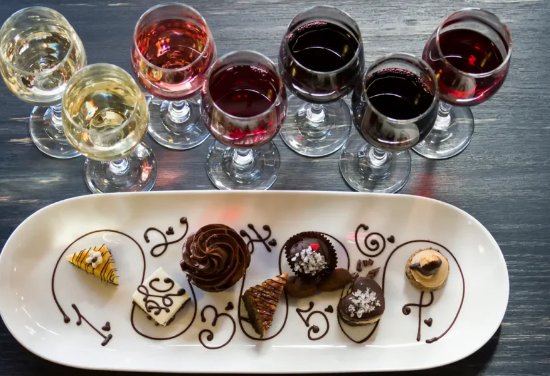
By sweet wine we mean a wine harvested late, with a higher concentration of sugars (possibly 280-290 g/l). Naturally we have an imbalance between the amount of sugar and acidity. As the grape accumulates sweetness, the acidity decreases significantly. The aroma passes easily into the opening and the taste becomes increasingly flat. The winemaker is the one who chooses the optimal moment between the alcohol content and the desired quantity of sugar. We are talking about a sweet wine with a low production cost (with an acidity probably less than 5 g/l) and an overripe aroma of exotic fruits.
Dessert wine and acidity!
The secret of a successful dessert wine remains acidity! There are different techniques for obtaining sweet wines but they all have in common the single objective of maintaining the acidity of the grape and adding aromatic and gustatory complexity to the Bacco liqueur. To balance the taste, the greater quantity of sugar requires a corresponding acidity.
Among the most famous techniques we remember:
- Raisins (dehydration)
- Ice wine
- Botrytis Cinerea (noble rot)
The dessert wine obtained from Botrytis Cinerea.
Botrytis Cinerea is a noble mold which in favorable climatic conditions of humidity (minimum 90%) and temperature (15-20 °C) offers us the most complex dessert wines. Mold has the great quality of dehydrating the grapes, concentrating the sugars, natural acidity and aromas (honey, jam and marzipan).
These wines are obtained only in some areas of the world and only in certain vintages. The risk of the mold turning grayish is high and the production could be lost within a few days. The harvesting process is particular (always manual and sequential according to maturation) with a quantity of sugars equal to at least 450 g/l required for Tokaji Aszú). Both pressing and fermentation require particular attention and maturation takes place mainly in oak barrels. All these “small details” can be found both in the uniqueness of the product obtained and in its high price.
The dessert wines obtained from these noble berries are among the most appreciated worldwide: Tokaji, Sauternes and TBA (Trockenbeerenauslese).
Ice wine/dessert wine Eiswein
The method involves the late harvesting of frozen grapes (when the temperature is below – 8 °C), especially at night. And press them while still frozen to remove the water. Ice concentrates not only the sugars but also the acidity and extract of the wine.
Like noble rot, the frost method can only be used in certain vintages (when autumn is mild and without precipitation and the grapes develop in optimal conditions until the first frost. The wines tend to express a pure fruit flavor and the freshness of high acidity. We have several countries famous for producing Eiswein wines and we list here: Germany (by far the most important producer), Austria and Canada (more lax legislation).
Dessert wine made from raisins
This method involves obtaining dessert wines in areas where the climatic conditions are not favorable to botrytis or frost. It involves manually harvesting the grapes when the acidity is high, placing them in a single layer in special boxes (or on mats – air circulation is very important to avoid the appearance of mould) and natural dehydration for a period of 2-4 months.
The method involves obtaining a must with a maximum yield of 35% and a sugar concentration greater than 400 g/l. The high acidity is also a big plus. The must is then fermented and matured in oak barrels, at a controlled temperature to define the quality of the passito wine obtained.
Both selective hand harvesting, crate cost and low yield directly affect our cost of the finished product. Oak barrels are absolutely not necessary, the reductive style is also accepted. Micro oxygenation and suspended yeast define our quality and style. Dessert wines require a lot of work and should be appreciated at their true value. And of course it involves high costs, which means an appropriate price.
It is recommended to consume dessert wine at a temperature of 10-12 °C. It is served with fine cheeses, foie gras with caramelized onions, terrines of all kinds, desserts and fruit tarts. An absolutely charming way to end a hearty meal with loved ones.
latest posts published

Tired of working in the garden? What can be done to reduce maintenance
How to successfully transplant a Christmas tree

Landscaping a new plot: where to start?

What grows in clay: This is what worked on Juste’s farm

Organic seeds: are they worth paying more for?

Preventive spraying of tomatoes with homemade remedies –
Environmental management: how to renovate a bored plot?

Designers answer what are the 3 best plants for the garden

Fruit trees online: how I ordered them and how I planted them