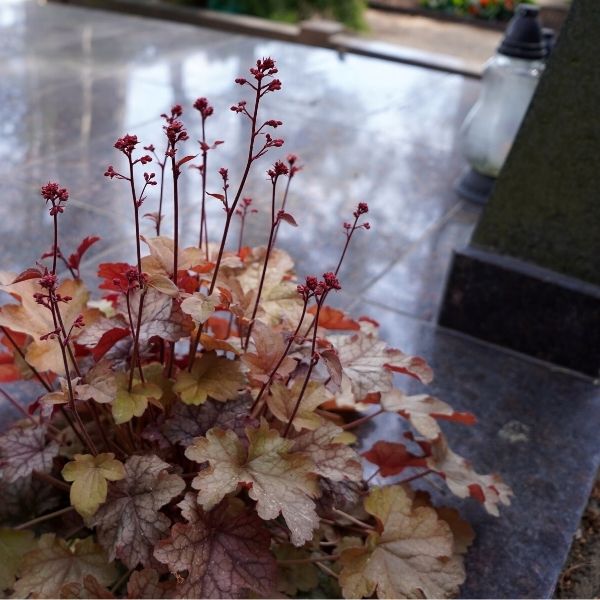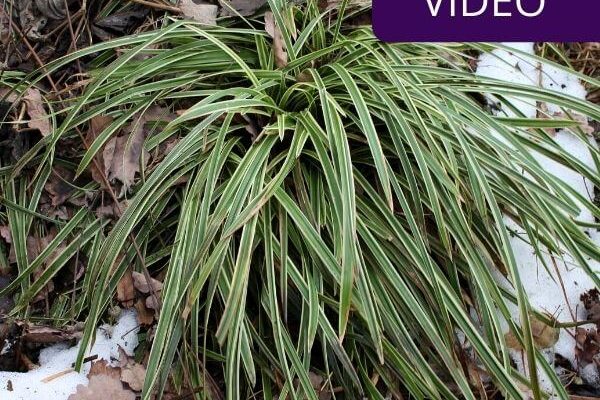
After a snowy winter, bell plants resemble a quarantine hairstyle: they are strangely stiff, no longer have a clear shape or color. Time to fix them! What is the care of bell plants in spring, which of them need to be cut a lot and which should be simply planted, clearly explained and shown They were Marozienėgreenery specialist and “Yellow Wheelbarrow” courseBellflower designteacher:
In the article you read what should be the care of bell plants in spring:
- How to cut lime trees, miscanthus and other Campanian plants that die in winter;
- How to cut sedges and other semi-evergreen plants;
- How to manage evergreen bluebells that don’t die over the winter.
CARE OF CAMPANIA PLANTS: WHEN TO CUT
For many years it has been customary to set up the flower garden in autumn, but many bluebells remain in an upright position for a long time and perform an excellent structural function in the yard, so it is worth leaving them over the winter. Therefore, the bluebell season ends not before winter, but after winter, so it’s time to cut off the dying, non-viable aboveground part.
- March is the best time to cut the land part.
- Due to strong wind, heavy snow or heavy drizzle, bell-shaped plants can tip over and break earlier, so it is not a problem to prune them in autumn or mid-winter.

V. Marozienė says it’s best to do this when the ambient temperature is around 0°C or a degree or two below. This is why it is important not to delay this work too long:
- In light frost, the stems of bell plants are stiff and strong, and such cutting is convenient and easy. As the weather gets a little warmer and the stems soften, it will be harder to work with, so it will take longer.
- It is best to cut before the plants begin to actively produce new shoots (seta). You will have to be very careful not to hurt the plant when you do this later. For example, it is extremely important to cut the palm sedge in time, because it begins to recover very soon.
THERE ARE THREE GROUPS OF CAMPAIN PLANTS
The management of the aboveground part depends on the group to which the plant belongs:
- Deciduous bellflower plants are those whose entire aerial part turns brown in winter and new shoots sprout in spring;
- Semi-evergreen bell plants: some leaves die and others remain green even in winter;
- Bell-shaped evergreen plants: Their leaves do not die in winter.
HOW TO MANAGE PLANTS IN DANGER
- Take the stems and cut them down to the ground.
- There are those who say that it is better to leave old stems of 10-15 cm, so that the new fresh shoots do not emerge, but rest on the old ones as they grow. Normally there is no such need, so Vaiva boldly cuts without leaving stems of such height. But if you prune late and there are already many new green shoots, you can leave the old stems taller just to damage the young ones less.
Cut to the ground:
- Landrunus,
- miscanthus,
- Melvenes,
- Virboli,
- Sora,
- sisters
- The viksvas of Palmine.
HOW TO CARE FOR SEMI-EVERGREEN CAMPANCHI PLANTS
The most popular semi-evergreen bell plants are sedges. Manage them as follows:
- Grab the leaves and cut off the golden tips;
- Comb the rest of the leaves with your fingers, eliminating any dry dead leaves;
- Cover the leaves, release them so that the air can penetrate between them: the plant will be able to dry properly and therefore the possibility of contracting diseases or mold will decrease;
- If the semi-evergreen plant has been heavily crushed by snow and has suffered greatly as a result, feel free to prune it more, and if necessary, to the ground. You can rest assured: the plant will definitely recover.
HOW TO TAKE CARE OF EVERGREEN BELL-SHAPED PLANTS
There are not many bell-shaped evergreen plants, one of which is the broadleaf sedge (Carex plantaginea). Usually it is enough to move it, give it a thumbs up and simply greet the start of the new season.
But it happens that even bell-shaped evergreen plants are very tired after winter: they are covered with snow or burned by the sun. In this case, don’t even be afraid to cut them to the ground: in this way the plants will be able to grow back much more beautiful and stronger.
TREATMENT OF CAMPANCHE PLANTS: WHICH TOOLS TO USE
To ensure maintenance and management of bellflower plants goes smoothly and easily, cut the plants only with high-quality, well-sharpened tools. For the first stage of work, the following will be needed:
The greenery specialist emphasizes that the first cut must be done by hand. This is important because wild animals (such as hedgehogs) or birds often hibernate in bluebells.
After cutting the plants by hand and making sure they are free, you can finish cutting the remaining plants with a lawnmower on the highest setting, a battery-powered brush cutter or a trimmer.
latest posts published
Tired of working in the garden? What can be done to reduce maintenance
How to successfully transplant a Christmas tree
Landscaping a new plot: where to start?

What grows in clay: This is what worked on Juste’s farm

Organic seeds: are they worth paying more for?

Preventive spraying of tomatoes with homemade remedies –
Environmental management: how to renovate a bored plot?

Designers answer what are the 3 best plants for the garden
Fruit trees online: how I ordered them and how I planted them