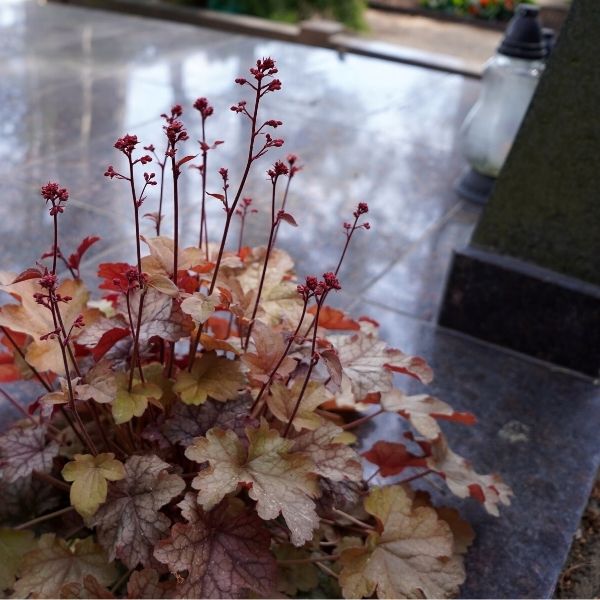
Today I am in the company of some very special plants. They look like bamboo but in reality they are Saccharum officinarum, better known as sugar cane of cinnamon.
Let’s try to get to know it better and understand how we can grow it in our collection of particular plants
Sugar cane: origin
Originally from tropical regions of Asiasugar cane (Saccharum officinarum) belongs to the Poaceae family (once called Graminaceae), the same as corn, barley, rice and most cereals used for food). This plant was brought to Europe by the Arabs, first to Spain in 700 AD and to Sicily in 900 AD, subsequently to the rest of Europe. Today, the world’s largest producers are Brazil, China, India and Thailand.
Sugar factory

The Saccharum plant it can reach 4-5-6 meters in heightyour stems, they are called culms and are hollow. They have a diameter from 3 to 5 cm and reach 10 kg in weight, they can have a yellow, purple or reddish color and they contain a syrupy fluid from which, after various industrial processes, sugar is obtained.
Its leaves I am long, green and lanceolate; the culm that they will cover is divided into nodes and internodes and the leaves each grow from a different node. The nodes are normally very close to the base of the culm and tend to space apart as they move away from the ground.
Your flowers they are gods ears similar to that of oats and wheat, they are gathered in inflorescences called panicles which also reach 90 cm.
Its roots I am cylindrical mom Not I am rhizomatous.
Growing sugar cane
Sugarcane, with its tall, fleshy stems rich in sweet sap, is a perennial herb that has conquered the world for its versatility: from the production of sugar and molasses to use as an ornamental plant in gardens. Thanks to its ornamental foliage and vigorous growth, it is perfect for creating natural screens, borders or focal points. Its cultivation, however, requires some attention: the long leaves have sharp edges and the plant prefers warm climates.
Growing sugar cane might seem complex but it is actually relatively simple even for gardening enthusiasts. Like many other grasses, sugarcane is not very demanding and adapts well to different conditions. However, the most critical factor for its survival is temperature: it does not tolerate intense cold.
What does it take to grow sugar cane? Let’s find out now!
Where to plant sugar cane?
Sugarcane needs positions of full sun in order to grow better.
Ideal soil for sugar cane
Sugar cane It adapts well to most terrainsas long as they are well drained. It prefers deep and light substrates, with a pH between 6.0 and 6.5.
For pot cultivation I recommend the always reliable One plus.
Furthermore, I also suggest, both in pots and in the ground, to add organic matter such as earthworm humus, leonardite or compost, which improve the fertility of the soil and provide the nutrients necessary for the vigorous growth of the plant, which absorbs the nutrients rather quickly.
How to wet sugar cane
Brown sugar thrives under conditions constant humiditymom it cannot tolerate water stagnation. In the absence of sufficient rainfall, it is necessary to water the plant regularly, even every day during the warmer months. However, to encourage the accumulation of sugars in the stems, it is advisable to slightly reduce irrigation in the final stages of cultivation.
However, when growing sugarcane in pots, the most difficult thing is to keep the earth always moist, because it dries out much more quickly than in the garden. You will therefore have to water your plant more often.
Ideal temperatures for sugar cane
Sugar cane prefers hot and humid climatesagainst ideal temperatures around 30°C. Temperatures below 20°C slow down growth, the minimum bearable temperature varies depending on the variety, but is generally around 5°C.
When winters are too harsh (as, for example, in northern Italy) and do not allow temperatures to remain above 5°C, it is advisable grow the plant in a pot so you can take it to shelter as soon as temperatures start to get excessively cold.
How to fertilize sugar cane
Sugarcane is a very plant greedy for mineral salts therefore the organic substance is very good, but you also need to add a ready-to-use nutrient. You must use gods fertilized with a high nitrogen contentas a liquid (or granular) fertilizer for green plants. One thing to be careful about is to avoid applying fertilizer directly to the base of the plant to prevent burns.
Prune sugar cane
Excessive foliage growth can cause a messy appearance in sugarcane. Regular pruning, consisting ofelimination of dry, damaged or yellowed leavespromoting air circulation and also reducing the risk of parasitic attacks. Pruning residues, rich in nutrients, can be used as mulch to enrich the soil or for plant propagation.
When the plant begins to age and no longer produces suckers, the ideal is to cut one of the mother stems at the base, in order to push the sugar cane to produce new material.
Propagating Sugar Cane
Sugarcane can be propagated both by seed and cuttings. Propagation by cuttings is a simple method that allows you to obtain new plants starting from a single stem. To make a cutting, simply take a segment of healthy stem, approximately 15 cm long and with at least two knotsplant it in a moist and well-draining substrate, burying it about 5 cm. After about two weeks, the cutting will send out new roots and shoots, giving rise to a new plant.
It is also possible to make cuttings starting from a single nodebut in this case the pieces of stem must be placed in the ground horizontally, with the buds facing upwards and then covered with just a thin layer of earth.
The cuttings root even in water.
Growing sugarcane from seed
Although propagation by seed is possible, this methodology is less reliable than using cuttings and is generally recommended only for ornamental cultivation.
Sowing should be done directly in the garden about two weeks after the last frost, when the soil temperature has reached at least 15°C. Bury the seeds to a depth of 2-3 cmspacing them apart 20-30 cmto encourage pollination, it is advisable to plant sugar cane in blocks of at least three rows per side.
Keep the soil constantly moist. After germination (which occurs after about 10 days), thin out the seedlings leaving a distance of 20-30 cm between one and the other.
Potting and repotting sugar cane
Do you want to grow sugarcane even if you live in a cold area? Don’t worry! It is possible to do this in a pot (not ideal I admit, but it is possible). A vase should be chosen that is deep enough (at least 35 cm) and wide (from 20 to 50 cm, depending on the plant) with many holes in the bottom to allow the water to drain. Fill it with good quality potting soil mixed with compost. Then remembering change vase (watch out for overpotting!) and soil every yearor when the plant’s roots become too narrow.
Sugar cane pests and diseases
Sugarcane is susceptible to numerous pests and diseases. Among the most common parasites we find above all cochineal, caterpillars, cane borers (Diatraea saccharalis) and termites.
Sugar cane: from plant to sugar
Sugarcane takes about a year to mature. There The sweetest part of the cane is located at the bottom of the stem. The harvest takes place in autumn, before the frosts, once cut, the cane is pressed to extract the juice, which is then purified and transformed into sugar crystals.
It is important that the harvest takes place in autumn to prevent the cold from damaging the plant and reducing the amount of sugar. Furthermore, cane flowering reduces sugar production, so early harvesting is preferable.
How is cane sugar made?
Brown sugar is obtained from sugar cane. Imagine taking a natural candy cane, removing all the leaves, and then crushing it to release the sweet juice inside. This juice is then cleaned and transformed into sugar.
More or less the process is this: the Sugar cane, severed at the base and deprived of leaves and ears, it is transported to industries dove Dand the mills with horizontal cylinders they crush the cane, squeezing the juice contained within it. The juice, collected in a tub below, is subjected to a boiling and purification process. The raw sugar obtained can be consumed already in this state or subjected to subsequent refining. From sugar canes, in addition to sugar, other products can also be obtained such as guarapo and other fermented alcoholic and distilled products.
An extraction residue, the bagasseit is used in various ways: as fuel even for the sugar refineries themselves, as a secondary material in the production of paper and as a fiber in the production of chipboard panels in the furniture industry.
It can also be used in the production of furfural, an organic compound used as a flavor enhancer in the food industry.
latest posts published

Tired of working in the garden? What can be done to reduce maintenance
How to successfully transplant a Christmas tree
Landscaping a new plot: where to start?

What grows in clay: This is what worked on Juste’s farm
Organic seeds: are they worth paying more for?
Preventive spraying of tomatoes with homemade remedies –
Environmental management: how to renovate a bored plot?

Designers answer what are the 3 best plants for the garden
Fruit trees online: how I ordered them and how I planted them