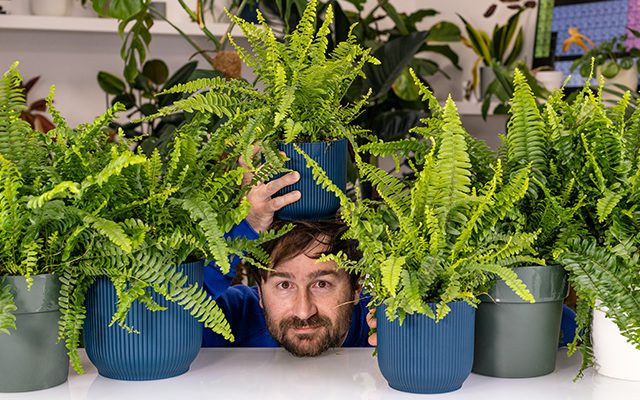
The Boston fern (Nephrolepis exaltata) is a popular fern species that grows in many tropical areas of the world. It is considered a houseplant, mainly due to the moderate amount of light it requires.
Its slightly disheveled appearance and its good adaptability make it a little jewel, even for unusual rooms such as the bathroom!
Why the bathroom? To find out, continue reading 😉
Boston Fern Care
Boston ferns can easily be grown indoors as long as proper care is given to give them the right conditions. It is important to maintain stable growing conditions as any element of their care can quickly damage the plant.
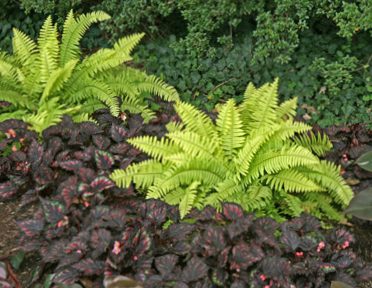
Before diving into the details it is right to give a small warning: they are plants that are quite sensitive to chemicals, smoke and absolutely do not like air currents, in short, useful things for deciding which position to choose.
Where to place the Nephrolepis
Boston ferns are comfortable with bright, indirect light. Too much shade can result in sparse fronds without their characteristic bright color, at the same time as too much sun can burn the leaves.
To thrive best, the plant needs about 2 hours of bright, indirect light. During autumn/winter the plant can also tolerate direct light.
Temperature
Nephrolepis prefer mild temperatures, between 18 and 23°C.
Otherwise they tolerate neither extreme heat nor frost. Temperatures above 35°C or below 12°C can cause extensive damage.
They don’t like extreme temperatures, this includes drafts, air conditioners and heating vents.
Wetting
To successfully grow Boston ferns, it is crucial to keep the soil slightly moist (but not soggy) at all times. If the soil begins to dry out, the fern’s foliage may quickly dry out and eventually fall off.
During the autumn and winter months, reduce watering slightly, as the plant is not actively growing.
Humidity
Humidity is essential for this plant, which is why it is a perfect bathroom plant!
In fact, surrounded by the steam produced by the shower you will certainly feel at ease. High humidity is critical for Boston ferns. They thrive at humidity levels around 50-60%.
Substrate
These ferns like loamy, organic-rich soil with good drainage. Poorly drained soil can cause root rot and eventually kill the plant.
We recommend One plus, One or Florenpot.
Fertilization
From spring to early autumn it is advisable to give Nephrolepis liquid fertilizer for green plants, following the doses on the label.
Propagation
You can propagate this fern by division when repotting or by cutting.
Some dabble in reproduction via spores but as well as being a rather complicated process it could also be unsuccessful as many of these ferns are not pure species and therefore do not produce viable spores.
I repot
Repotting, as we have explained to you in this article, should be done when the roots begin to be thick on the clod of earth, as long as you are ready to see it grow further!
We recommend paying particular attention to keeping the fern at the same level of the ground in which it was previously found, it is very important not to bury the crown as this could lead to the dreaded collar rot.
The best time to do this is spring.
Pruning
Although pruning is not essential, the removal of dried leaves is recommended to preserve the aesthetic value of the plant.
Parasites
An enemy of the Boston fern is certainly the mite, fortunately in this article we have explained how to behave if you spot it 😉 however, it is good to remember that a well-humid plant will run fewer risks.
Recurring problems
Dark brown spots on the underside of the leaves
This phenomenon is perfectly normal, the plant is very healthy 😉
Brown leaves
In most cases, brown leaves are caused by dry air or by the soil remaining dry for too long between one watering and another. Or, just to complicate the diagnosis a little, it could also be a symptom of too much water.
Leaf fall
It is normal for the plant to lose a few leaves, but if the fall becomes significant, the problem is likely to be found in poor irrigation.
Yellow leaves
Yellow leaves can be a symptom of various problems, among the most probable we find the use of excessively cold water for wetting and exposure to drafts.
Description of Nephrolepis
The Boston fern has graceful blue-green and drooping fronts, naturally cut in such a way as to give it a ruffled effect, really beautiful especially when you decide to place this plant on a shelf or in any case in an elevated position that allows it to dangle the leaves.
It has rapid and regular growth throughout most of the year when conditions are favorable. Growth slows during the cooler months.
It reaches a maximum height of approximately 90cm.
Making Nephrolepis flower is impossible, however it could develop brown spots on the lower part of the fronds, in this case it is not a disease or a fungus, but rather spores!
Taxonomic description
Nephrolepis is a genus of about 20 species of evergreen or semi-evergreen, epiphytic and terrestrial.
Habitat
They are native to tropical and subtropical areas of many parts of the world.
The Boston fern is pet friendly
Great news for pet owners: Nephrolepis is pet friendly!
Historical notes
The Victorians were particularly fond of species such as N. cordifolia, thanks to its rigid and more orderly fronds. Today, however, things have changed and the more modern look of a beautiful Boston fern is certainly much more appreciated!
latest posts published

Tired of working in the garden? What can be done to reduce maintenance
How to successfully transplant a Christmas tree

Landscaping a new plot: where to start?

What grows in clay: This is what worked on Juste’s farm

Organic seeds: are they worth paying more for?
Preventive spraying of tomatoes with homemade remedies –
Environmental management: how to renovate a bored plot?

Designers answer what are the 3 best plants for the garden
Fruit trees online: how I ordered them and how I planted them