Growing watermelons still seems exotic to many people, even though at least 18 different varieties can be bought in Lithuania. After reading you will learn how to grow them: large or small, red or yellow pulp, sweeter or fresher: you just have to choose. I interviewed watermelon enthusiast Linas Narvydienė (on Instagram she is @laimingas_darzas), who explained how to choose the right variety for beginners, when to sow, how to transplant seedlings and how to know when it’s time to harvest a watermelon.
A variety of watermelons
There are many different types of watermelons. The varieties differ:
- Shape: can be round or elongated. Lina says there are watermelons and “stem” shapes: one end is wide and the other is narrow.
- In terms of fruit size, some become small, while others are grown to break records. For example, the fruits of the watermelon variety “Carolina Cross” can reach 100 kilograms or more (not in Lithuania).
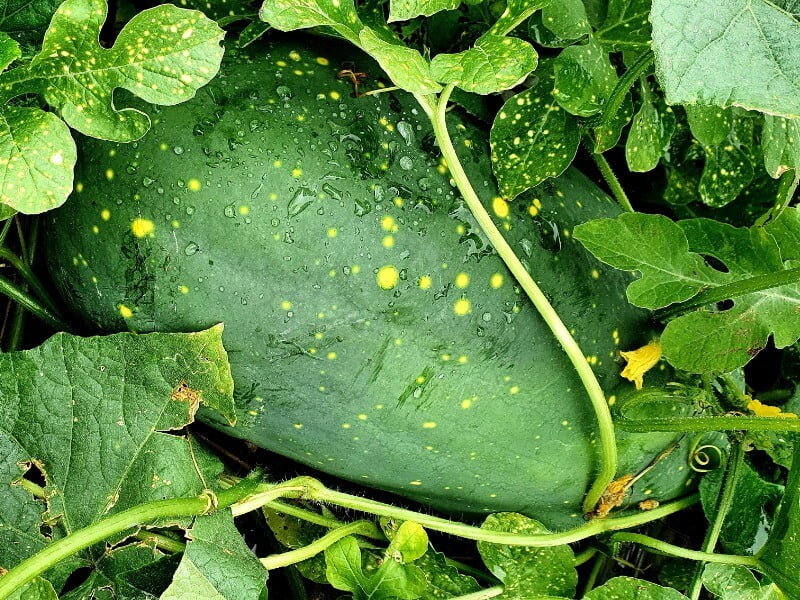
- In the bark. There are monochromatic ones: for example yellow or dark green. Sometimes with stripes or even with yellow spots.
- Pulp color. There are even five: red, yellow, orange, white and pink.
- Sweetness.
- During the growing season. Watermelon varieties are divided into early, medium-early and late.
You can learn the secrets of growing vegetables from an expert: we invite you to the course “Modern garden”. It’s remote Detailed training for those who want to grow plants not by intuition, but on the basis of scientific knowledge and the accumulated practice of experienced gardeners.
What to choose for beginners
So how do you choose the right breed and where to start? Lina recommends choosing watermelons with a shorter growing season, i.e. early or medium-early varieties. The shorter the growing season, the greater the guarantee that watermelons will have time to grow and ripen even in a cooler summer.
True, if you like seedless watermelons, Lina is quick to point out that they are temperamental plants. Although seeds can be purchased in Lithuania and are said to grow well here, it should be kept in mind that seedless watermelons are sterile and do not produce fruit when grown on their own. Therefore, it is advisable to grow watermelons that flower at the same time and have seeds once grown.
Proven varieties for beginners:
- “Kiemintai” is the most popular watermelon variety in Lithuania. It is a breed bred by breeder K. Nedzveck, adapted to the climate of Lithuania. With deep red pulp, dark green to lighter green bark – the variety is not established, so variations exist. Very sweet.
- ‘Sugar Baby’ – as Lina says, these watermelons will always grow and ripen – such a proven and reliable variety. The fruits reach a low weight (4-5 kg) and are distinguished by an extremely intense sweetness, for some even excessive. The pulp is bright red and the bark is monochromatic, dark green. It is the second most popular variety in Lithuania.
- ‘Janosik’: plain green watermelons with deep yellow flesh. The fruits are slightly less sweet than other varieties.
- ‘Red Star F1’ is a hybrid variety that Lina grows every year. Watermelons are among the first to ripen. The variety is resistant to diseases and the taste is reminiscent of traditional watermelons.
Growing watermelons from the very first steps
Watermelon sowing:
- Plan to sow in April. Lina recommends paying attention to the available conditions: watermelon seedlings require a lot of light, so if your home lacks it, it is better to plant after April 20th, when the days are already longer.
- Sowing in 1 liter pots. They don’t like repotting, so allocate a seed pot right away.
- Grow the seedlings at home or in a greenhouse for about a month.
Transplanting seedlings into the field
Move watermelon seedlings outdoors around the last week of May, but if it’s cooler, by mid-June. Pay attention to the weather, because even half a degree of frost can be devastating to watermelons.
Choose a good place for watermelons in the garden. They need a bright, open and sunny place, preferably on the south side, where the sun will be abundant.
Give watermelons enough room to grow. This can be difficult to predict at first. The expansion of the plant depends a lot on the variety: some are more compact, others grow up to 3 meters on each side. Lina allocates a bed of 1.5 m for watermelons and leaves 1.5 – 2 m for paths. In the second half of summer the paths are no longer visible, but that’s basically enough.
When planting seedlings in the ground, do not disturb the roots: watermelon roots are very sensitive, try not to damage them.
After transplanting into the field, cover the seedlings with agricultural film. Even if the days are hot in June, the nights can still be cool: if the temperature drops below +15 degrees, the watermelon plants no longer grow during the day or at night. Lina keeps the watermelons covered until midsummer, then the nights get warmer, they begin to flower, the covers can be removed.
How to care for watermelons
Lina recommends fertilizing the transplanted seedlings with nitrogen-containing fertilizers after 10 days: they will favor the development of leaves and stems.
After a few more weeks, watermelons can be pampered with potassium-rich fertilizers: they will ensure the flowering of the plant and fruit settin
Lina jokes that irrigation is probably the biggest debate among watermelon growers. There is no consensus. Some water a lot and rarely, others often and little by little.
However, you should not overdo it with watering, because the roots may begin to rot – after all, watermelons come from hot countries, where there is not so much water. Watermelons absorb the necessary water through their leaves, so the morning dew is the same for them. And then the situation should be monitored based on the weather.
Although watermelons expand rapidly, they should not be pruned. The plant bears fruit first on the main stem, only later on the side branches, so if you prune it, not only can you lose part of the crop, but the fruits will also become smaller.
When to harvest watermelons
The harvest month for watermelons is August, but again everything depends on the growing season: early varieties start producing at the end of July.
Beginner watermelon growers often wonder how to know if a watermelon is ripe and ready to harvest. Lina says that there is no very reliable recipe: sometimes even she doesn’t succeed and is disappointed after cutting it. The opposite also happens: there are no signs and the watermelon is already fully ripe.
It is already possible to harvest watermelon, Lina suggests following the following instructions:
- Look for a dried tendril and a brownish, teardrop-shaped leaf called an auricle. Both the tendril and the ear should be looked for near the stem of the watermelon.
- Another way is to carefully turn the watermelon and check the color of the part that rests on the ground. If the watermelon is ripe, the spot is bright yellow. If not yet ripe: whitish or greenish.
latest posts published

Tired of working in the garden? What can be done to reduce maintenance
How to successfully transplant a Christmas tree

Landscaping a new plot: where to start?

What grows in clay: This is what worked on Juste’s farm

Organic seeds: are they worth paying more for?
Preventive spraying of tomatoes with homemade remedies –
Environmental management: how to renovate a bored plot?

Designers answer what are the 3 best plants for the garden
Fruit trees online: how I ordered them and how I planted them