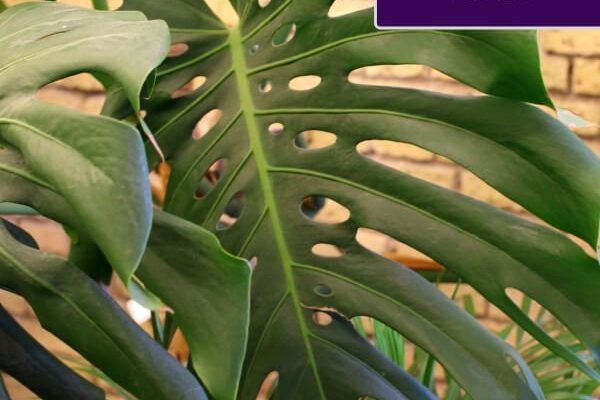
Monsteras – yes, those flowers with large holey leaves! But monstera leaves can be without holes, large and small, elongated and round. If you’re thinking about purchasing this flower but don’t know if it will work for your home, read on. This time together with Oresta Dvarvytyte from the studio “Flowers of the house” let’s talk about popular and lesser-known types of monsters and the right home environment to grow them – I invite you to watch:
If you are not very familiar with monsters, after reading the article you will know the answers to the following questions:
- Can monsteras grow in a fairly dark house?
- Why do some monsters have holes in their leaves and others not?
- What type of monster is the most popular, and which are less common?
In nature, Monstera are vines that fight for light
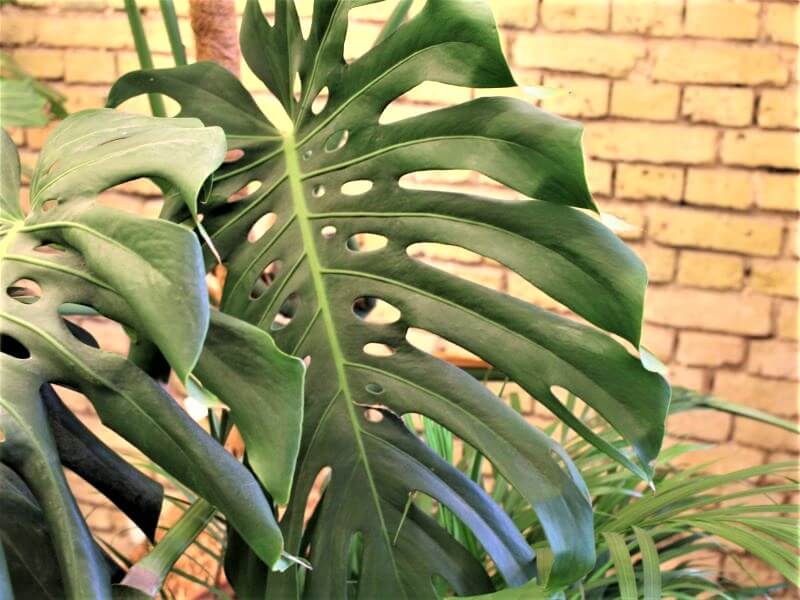
Orestes reminds us that monsters are actually vines. It grows naturally in tropical forests among a multitude of other large and small plants that block the sun. Then, struggling for sunlight, they attach themselves to other plants (trees) with their aerial roots and grow by climbing them. It is believed that monsteras have holes in their leaves so that sunlight passing through them can reach the leaves below.
Monsters in the room: how to choose a place for them at home
Since monsteras are naturally accustomed to being surrounded by other plants in nature, their indoor sisters are also not afraid of the dark. So, if it is dark in your house, feel free to choose monstera, because such conditions are not an obstacle to its growing successfully and being magical.
On the other hand, even if this flower does not feel bad in the dark, it should not be relegated to the darkest corner of the house. Light is also necessary for monsters. Only not direct sunlight and heat, but diffused light. In addition, the size and splendor of monstera leaves also depend on the amount of light:
- if the monstera grows in a room with a lot of diffused light, its leaves will be larger, have more holes and will be cut more;
- by keeping the monstera darker, its leaves will be a little more modest, smaller and have a little fewer holes.
So, monsters do best on the west or east side of the house, where the sun doesn’t shine, but it’s not particularly dark either.
By the way, monstera are not the only indoor flowers that tolerate less sun. You can find other interesting options in our article “For homes with style: 7 indoor plants that love the dark”, then click to read.
The most popular indoor monsters
It is mainly grown at home, so it is the most popular type of monstera the wonderful monstera (Monstera delicious). This type of plant can grow up to 3 m tall in indoor conditions and is characterized by extremely large, dark green, richly cut and perforated leaves.
If you purchased such a monstera, but its leaves are solid and without holes, do not be afraid: in the long term they will definitely become what you expect. Tears and holes in the leaves gradually form as the plant matures:
- despite being very young, the leaves are rather small and solid;
- eventually a tear appears on the edge of the leaf and the number of tears increases;
- holes also appear on mature plants;
- on mature and old monstera leaves you can also see two rows of holes on both sides of the leaf.
Less common monster types
Oresta introduced three less popular, but no less beautiful monster types:
1) Monstera karstenianum. These monsters are distinguished from other species by the appearance of their leaves:
- they are solid, intact and without holes;
- the leaves are of different shades: from pale emerald to intense green. It is true that if you grow this monstera in a darker environment, its leaves will be simply dark green, without an emerald shade, and once transferred to the light more colors may reappear;
- they have a certain consistency: they are wavy.
2) Monstera adansonii. Monsteras of this type can have narrow, elongated and perforated leaves, or a little larger and rounder.
3) Monstera adansonii is often confused with another species – Monstera oblique. But Oresta says to buy Monstera oblique your house has about the same chance of finding a diamond as walking down the street. Only three or four breeders in the world have such monsters in their collections, and others simply use this name illegally.
Monstera oblique special in this:
- it is miniature – grows up to 1 m in height;
- its leaves are thin, almost translucent, with large holes arranged asymmetrically; when you touch them, it seems that there is simply nothing between your fingers;
- its stems are very thin, very young Monstera oblique the stem can be as little as 2 mm thick;
- Leafless twigs also grow on the stem.
latest posts published
Tired of working in the garden? What can be done to reduce maintenance
How to successfully transplant a Christmas tree
Landscaping a new plot: where to start?
What grows in clay: This is what worked on Juste’s farm

Organic seeds: are they worth paying more for?

Preventive spraying of tomatoes with homemade remedies –
Environmental management: how to renovate a bored plot?
Designers answer what are the 3 best plants for the garden
Fruit trees online: how I ordered them and how I planted them