Are you wondering if you need to moisten your Placo strips before installing them? Yes, in most cases it’s a great idea. This simple step improves adhesion, limits blistering and ensures a clean, long-lasting finish. But be careful: this gesture is not always essential, and if done badly it can complicate your work. AS, When should you really humidify? How to do it correctly? And above all, how to avoid common mistakes that ruin a beautiful Placoplâtre finish? Follow the guide: I’ll explain everything, step by step, with the experience of a passionate craftsman.
Why use Placo strips for plaster joints?
You strike a pose Placoplatre (OR square) without finishing the joints, leaves the door open to cracks, irregularities and poor final results. THE placo stripes ensure a clean connection between two plates, allowing the joints to be masked and sanding anticipated, before applying the paint, covering or whatever.
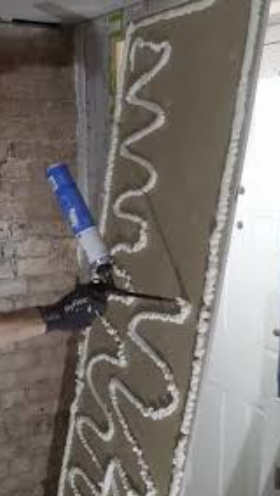
There are two main families:
- Strips of paper : flexible, economical, ideal for classic partition walls.
- Reinforced strips (fiberglass, adhesive strips) : perfect for sharp corners, stressed areas or delicate surfaces. The right choice improves durability, aesthetics and guarantees a stage work net.
Do Placo strips need to be moistened before installation?
Because wetting the stripes can change everything
Lightly moisten the strips facilitates theirs marouflagemakes them more flexible and improves themembership alfresh coatinglimiting air bubbles and cracks that occur when plaster dries too quickly or unevenly.
DIY experts often recommend this light touch because it prevents the dry strip from absorbing too much water right from the start, weakening the joint as the material dries. plaster joint. The result is smooth, durable, without cracking: a real plus for a professional finish.
Cases in which humidification is really recommended
- Conditions heat OR dry environment : air accelerates evaporation, and the dry stripes suck moisture out too quickly, encouraging cracks.
- You’re starting out in placo installation: more room for maneuver, fewer errors in stage work.
- Very absorbent and very fast-setting supports or coverings: wetting prevents excessive drying.
That said, if you use adhesive stripsCheck the manufacturer’s recommendations – humidification may affect their stickiness.
Wet Placo Strips vs. dry strips: which one to choose?
The concrete advantages of wet strips
- Improve membershipespecially in the first application.
- Less than bubblesblisters or areas of peeling.
- Uniform dryingwhich avoids superficial cracks.
- Improved handling: the strip follows the shape of the joints better and smoothes more easily.
Limitations and precautions to be taken with dry strips
- They absorb water from the coating too quickly → poor adhesion.
- Risk of crackling, detachmentor traces visible under the paint.
- Not very flexible, complex to adjust especially in corners or ceilings.
- In a dry environment they become very crumbly and the application becomes less fluid.
Three methods for properly moistening seam tapes
Wet sponge, spray or impregnating agent: which one to use?
- Well wrung out sponge : Gently rub each side. Perfect in small, well-dosed quantities.
- Fine sprayer : spray lightly, precise control, suitable for long lengths and surfaces.
- Quick dive : immerse 1 second, leave drain before installation. Very effective on large projects, to be tempered to avoid water overflows.
How to prevent the tape from dripping or becoming too soft?
- Always wring out: excess water alters the covering and complicates installation.
- Respect the draining time, especially after soaking: a few seconds are often enough.
- Use delicate gestures during application: the wet strip is more fragile.
Common mistakes when installing Placo strips
Wetting the strips too much: a common mistake
Excess water dilutes the coating, weakens the bond and causes the strips to slip. The result is blurry and not very long-lasting. Result: difficult finishes, constant rework and waste of time.
Bubbles, blisters and cracks: how to effectively prevent them
- Avoid air pockets: smooth from the center towards the edges with a smooth steel spatula.
- Apply to adhesive coating regular, neither too thin nor too thick.
- Respect gradual drying, avoiding strong air currents or dry heat, which cause uneven drying, generating cracks and bubbles.
The craftsman’s advice for a successful and long-lasting installation
Blend well and smooth for a flawless finish
- Use a limping well for the first masking, wider for subsequent layers.
- Always fluid like a sweet and continuous gesture, without jerks.
- Wait until completely dry before sanding or applying the next coat – that’s the key lasting aesthetic result.
Tips for saving time without sacrificing quality
- Prepare the strips as you go, rather than all in advance.
- Moisten continuously with a sprayer for a dose of 3–4 meters: cooled consistency.
- Work in 1–2 m areas to prevent the coating from drying before applying the strip.
- Usage reinforced strips for the corners and high impact areas and classic paper stripes on large flat surfaces.
FAQ – Frequently asked questions
Can we install Placo strips without getting them wet?
Yes, they can be dry installed. But in a dry or hot environment, this increases the risk of cracking, blistering or uneven adhesion. Light humidification is safer.
How much water is needed to moisten a strip of placo?
Just what you need: a well wrung out spongeA light sprayoh quick soaking followed by drainage. Excess water is absolutely to be avoided.
Is it necessary to also moisten the adhesive strips?
No, in general, bands self-adhesive it shouldn’t Not be humidified: this damages their adhesion. Always consult the manufacturer’s technical data sheet.
Does humidification reduce bubbles under the strips?
Absolutely. Humidification allows for better adhesion to the coating, facilitates masking and minimizes air pockets responsible for blisters.
Should you always humidify when it’s hot or dry?
Yes, it is strongly recommended because it slows down rapid evaporation, ensures more uniform drying and reduces visible defects.
latest posts published
Tired of working in the garden? What can be done to reduce maintenance

How to successfully transplant a Christmas tree
Landscaping a new plot: where to start?

What grows in clay: This is what worked on Juste’s farm

Organic seeds: are they worth paying more for?

Preventive spraying of tomatoes with homemade remedies –
Environmental management: how to renovate a bored plot?

Designers answer what are the 3 best plants for the garden
Fruit trees online: how I ordered them and how I planted them