A water tank is a wonderful thing, the pride and refreshment of the farm owners. To make the coast not only tidy, but also beautiful and lively, grow plants that will add color and coziness. What plants are suitable for growing near a pond or other body of water? – you will ask.
We answer whether plants are needed near the pond, what trees and shrubs are suitable, what decorative plants can decorate your shore:
ARE PLANTS NEAR WATER NECESSARY?
Many strange myths have appeared, supposedly plants near the pondespecially trees and shrubs, they throw “garbage” leaves into the water. Ingė Auželienelandscaping courses”Farm landscapingThe teacher states that plants and water coexist very well together.
In a large body of water (at least 3-4 acres) ecosystem he takes care of himself. Fallen leaves decompose in water, are “eaten” by microorganisms, plant remains become part of aquatic flora and fauna, and then naturally merge into natural processes taking place in water.
It is best when part of the water surface is in the shade. Therefore, trees and bushes near the turf are a good solution. Aquatic plants such as lilies serve a similar function. Don’t leave the turf exposed to the sun, as this increases the chance of it rotting. At least one third of the water surface should be in the shade.
SHRUBS AND TREES SUITABLE FOR GROWING NEAR WATER
I. Auželienė mentions willow as the most important, most suitable and most adaptable coastal plant. Willow (lat. Salix), depending on how it grows, is popularly called by different names:
- Blinde is a tree that produces “kittens” in spring.
- Cornflowers or brambles: those that grow in a bush.
- A willow is one that grows like a tree.
They all have a fairly large and strong root system, so they can strengthen the slope well. Plus, they feel great if there’s no shortage of moisture. Here is the perfect pond plant: undemanding and resistant.
White willow (lat. Salix alba) grows to a height of 20-25 m. Its waving branches descend and create a sense of flow, harmoniously combining the elements of water and plants. No other tree produces this effect so perfectly. Small willow leaves that fall onto the coast or directly into the water in autumn do not cause problems and do not require further treatment.
Cornflowers, or sedges, as we call them, are also excellent coastal plants. They are often avoided due to aggressive expansion. However, there are several less aggressive breeds of cockroaches. Moreover, they can have a different appearance: there are even creepers that can cover a considerable area.
If you choose trees or shrubs that will grow near water, from list discards thosethat do not tolerate waterlogging and high groundwater (for example, thuja) and those whose leaves decompose exceptionally slowly (for example, oak or walnut).
DECORATIVE PLANTS NEAR THE POND OR LAKE
It is not necessary to make the coast synthetic – and that’s exactly what you can call it, if it has only stones, concrete and grass. There must be more diverse plants, there must be lawns, there must even be some that hide the insects that bees love. We asked another teacher of the course, a perennial plant grower Rasas Laurinavičienėswhat would you recommend for decorating the coast:
Kamasija (lat. Camassia) – these are unpopular bulbous plants, native to North America, which simply grow in moist, sunny places. It can grow in the same place for a long time, turning into giant pendants. It flowers in spring. It is very suitable for naturalization at the edges of streams or ponds. There are different species and varieties.
Japanese primrose (lat. Primula japonica) – also loves humid places where it sows enthusiastically.
Watermelon (lat. Molinia) is one of the few ornamental grasses that can grow in seasonally waterlogged lawns. Watermelons are very undemanding, but long-lived, growing well from the beginning to the end of the season. Many varieties turn bright yellow in autumn
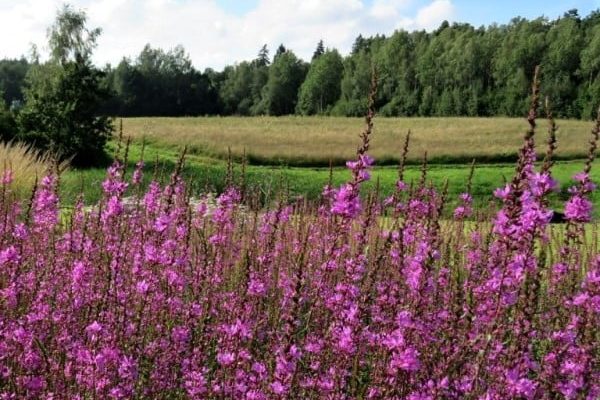
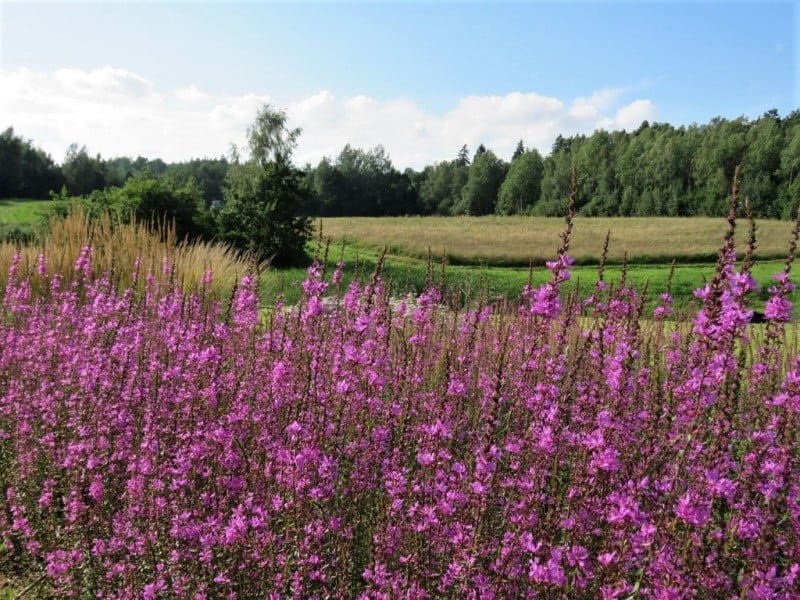
Red (lat. Lythrum salicaria) is a familiar plant found in wet meadows and rivers in Lithuania. Undoubtedly, the bred varieties are much more decorative. Extremely long and undemanding flowering: they would be excellent plants near the pond. If necessary it adapts to growing even in drier soils. The foliage of many varieties turns bright colors in autumn.
Siberian irises (lat. Iris sibirica) – unlike its bearded relatives, grows better in humid places. Due to their narrow foliage, which recalls that of decorative grasses, they are widely used in naturalistic greenery, therefore it will be perfect for a farm. Siberian irises are decorative even after flowering, as the pods look very interesting. In autumn the foliage is colourful.
Kemerai (Latin: Eupatorium) – impressive and robust plants that over time grow in large clusters. It can grow well in humid areas. Extremely durable.
Red ballerina (lat. Filipendula rubra) is called the queen of the prairies in America. A very imposing plant that reaches 2 meters in height. It blooms with pale pink, decorative, faded inflorescences. It grows in giant lawns in moist soil.
Everyone acids (lat. Polygonum) loves moist soil. Polymorphic polygon – not an exception. It grows slowly, but soon reaches a size of 2×2 m. A fantastic plant, extremely long flowering, good company for moisture-loving nightshades. The perfect combination for your country house by the sea.
Common lentil (lat. Bistorta major) is a common plant in the meadows and humid forests of Lithuania. The inflorescences of this variety are larger and more decorative. It flowers in early summer.
NATURAL WATER TANK – FEW PROBLEMS
Whatever plant you choose, remember that the best body of water is one with a healthy ecosystem. In the course “Homestead Greening”, I. Auželienė comments on the participants’ problems related to water bodies. The most common problems are bank maintenance and cloudy, cloudy water. This is influenced by the size and depth of the peat, as well as incoming water and soil. He says that even under the bes
latest posts published
Tired of working in the garden? What can be done to reduce maintenance
How to successfully transplant a Christmas tree
Landscaping a new plot: where to start?

What grows in clay: This is what worked on Juste’s farm

Organic seeds: are they worth paying more for?
Preventive spraying of tomatoes with homemade remedies –
Environmental management: how to renovate a bored plot?
Designers answer what are the 3 best plants for the garden
Fruit trees online: how I ordered them and how I planted them