Peat is a non-ecological choice because it takes centuries to form and we dig it up and use it without the possibility of restoration. This is what nature lovers say. I suggest you don’t take a slogan at face value, but instead stop to analyze what is environmentally friendly and what is good for the plant: peat, coconut fiber or compost:
Coir is promoted as a better choice than peat. In the following article I will compare what the advantages and disadvantages of compost, peat and coconut fiber substrate are, when ecology is an important evaluation criterion.
COMPOST AND GARDEN SOIL
At first glance, it seems that there is no better choice for growing plants than homemade compost:
- Zero kilometers: we produce it with what comes from the plants grown in our garden, and we use it right here, in the same garden;
- Zero monetary resources: free if we produce it ourselves;
- Zero plastic: we do not use plastic or other natural pollutants in the production of compost.
It sounds great, but when it comes to small plant seeds that we want to germinate, compost and soil are not the best solution after all, because:
- Such soil is usually too heavy and too compact, so it is very difficult for the delicate roots of the seedling to receive enough air;
- Compost and garden soil can contain various disease infestations (such as blackleg) that are devastating to young seedlings.
Therefore, the conclusion is as follows: compost and garden soil are not suitable for germinating seeds on the windowsill, but they are an ideal choice when planting adult seedlings in the soil outside.
PEAT AND ECOLOGY
Peat is usually used for planting and growing seedlings, because:
- The air circulates very well;
- Maintains humidity well.
Therefore, peat is an excellent medium for young plants to successfully grow and become stronger, despite the fact that it does not contain nutrients
There are more advantages of peat:
- Natural origin;
- A few kilometers: peat is also extracted in the peat bogs of Lithuania;
- Less plastic if we buy in large packs.
Unfortunately, from an ecological point of view, they have a major drawback:
- Peat is a non-renewable resource.
In nature, peat forms very slowly: the process lasts thousands of years. If they are constantly and excessively dug, there is a risk that peat bogs will disappear. This is why there is more and more discussion about the need to find alternatives to peat, which could be produced from natural sources, so as not to waste natural resources. As we use peat, scientists are looking for alternatives and gardeners are trying them.
COCONUT: ADVANTAGES AND DISADVANTAGES
Coir is said to be a great alternative because:
- It also lets air pass well;
- Maintains a good moisture balance;
- There is a renewable source: it is obtained from waste, that is, from the fibers of the coconut shell.
But if we look at the actual production process, we can see more important things. Processing coir to make it suitable for horticulture is a very time-consuming and resource-intensive production process:
- A lot of water is used (300-600 liters per cube of coir). It is mainly produced in India and Sri Lanka, and there are not as many water resources as in Lithuania: this alone makes the process unsustainable;
- In order for the material to stabilize and the pH to be correct, coconut fibers are treated with chemicals, after which they are washed and released into the environment with water;
- Coconut fiber has to be transported far to reach us.
Because of these arguments, experts say that coir is not a more environmentally friendly material than peat.
Regarding the needs of the plant, I have found different opinions. I did an experiment with tomato seeds: I tried where they germinated best: in peat, in different substrates or in coconut fiber substrate. Read herehow everything went and what results I got.
However, I have heard that the quality of the coco substrate and seed germination depend on the coco manufacturer. Therefore, I cannot boldly claim that the results of my little experiment are suitable for everyone all the time.
Before proceeding to my verdict, I cannot omit the question of peat and coco tablets.
PEAT AND COCONUT FIBER TABLETS – TO USE OR NOT?
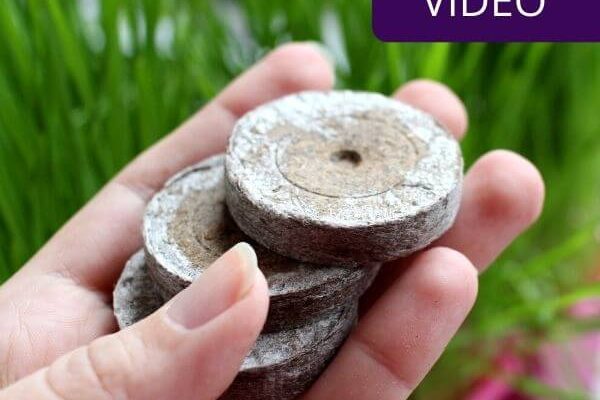
Compresses are compressed peat or compressed coconut, divided into portions for one plant and covered with a special cloth.
Such tablets are lightweight and take up little space. In addition, they are convenient to use: just fill them with water and the perfect medium for seed germination is ready.
But what is the shell that surrounds the pill? On the packaging it is often indicated that the wrapper is degradable and compostable. But it is rarely specified exactly what it is made of. Naturally the question arises whether this shell really decomposes completely or whether it eventually turns into microplastic particles that spread into our environment polluting it.
So, if ecology is your priority, I recommend buying a large bag of substrate, enough for all your seedlings, instead of tablets. All it takes is one plastic package, which you simply need to throw neatly into your plastic waste container for recycling.
latest posts published
Tired of working in the garden? What can be done to reduce maintenance
How to successfully transplant a Christmas tree
Landscaping a new plot: where to start?
What grows in clay: This is what worked on Juste’s farm
Organic seeds: are they worth paying more for?
Preventive spraying of tomatoes with homemade remedies –
Environmental management: how to renovate a bored plot?
Designers answer what are the 3 best plants for the garden
Fruit trees online: how I ordered them and how I planted them