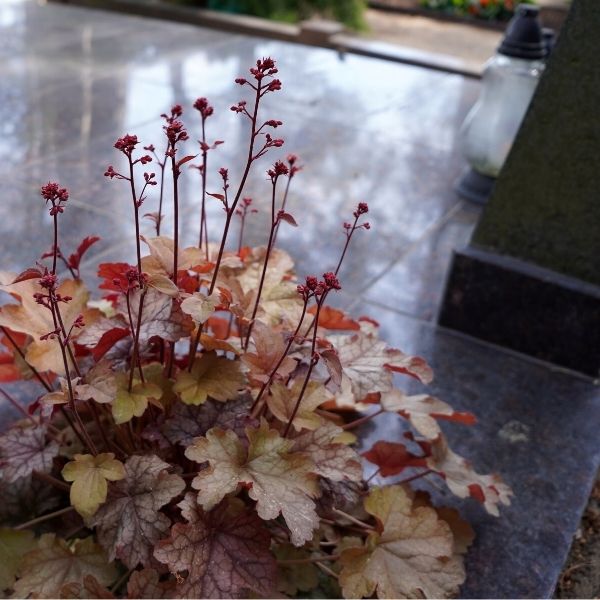
What naturalistic flower gardens are, how they differ from traditional ones and where in Lithuania you can see beautiful examples – all this was explained simply and clearly by the green designer They were Marozienėwhich is also a “Yellow Wheelbarrow” route. “Naturalistic flower garden” teacher
What are naturalistic flower gardens?
In the radio program “Plant enthusiasts” I asked Vaiva how he would describe these flower gardens.
In general, naturalistic flower gardens resemble wild, rolling meadows, only they are carefully created by the hand of man. Vaiva says not only are flower gardens created in a naturalistic style, but also other plants that can resemble a forest, swamp or coastal landscape.
Naturalistic design is both an aesthetic reminiscent of wild nature, as well as sustainability, and even a different planting density. Let’s discuss everything in order.
How do naturalistic flower gardens differ from traditional ones?
Traditional and naturalistic flower gardens have their own compositional rules and principles. And this determines their completely different appearance and structure.
In traditional flower gardens:
- many strict shapes and lines, brightly colored plant accents,
- between the plants – empty spaces so that each one has enough space and can reveal itself in all its beauty,
- in autumn the beauty ends, the plants settle down, in winter the flower garden is empty.
Naturalistic flower gardens:
- recalls the works of art of watercolor rain, where the boundaries seem to disappear and colors and shapes mix with each other, creating a harmonious and aesthetic whole,
- the plants are planted very densely, without leaving any gaps: up to 9 grass plants can be planted in one square met
- decorative plants are selected in winter.
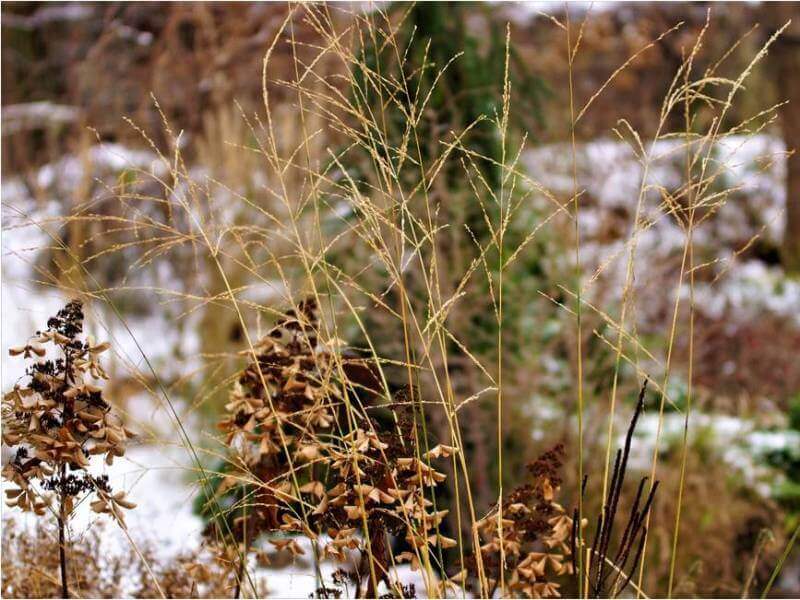
Are naturalistic flower gardens really natural?
Although composing naturalistic flower gardens aims to create the image of a natural meadow, completely wild plants are rarely used. Very often those already cultivated are chosen, which resemble those that grow naturally in nature. In general, plants improved by breeders adapt better, have a brighter color and are less aggressive towards other plants.
Although the expert says that it is possible to try sowing the seeds collected from a plant growing in the lawn. After all, the process of creating a naturalistic flower garden always has the flavor of experimentation. So try trying to create something incredibly beautiful!
How many bellflower plants to use in naturalistic flower gardens
In naturalistic style flower gardens, bell plants can occupy up to 50-80% of the entire surface of the garden. Abundantly planted bell-shaped plants of various heights, colors and textures create the effect of a rolling field with their stems and brushes. This is said to be one of the reasons why naturalistic design is also known as the “Dutch Wave”.
On the other hand, there are no hard and fast rules on how many bluebells and how many flowering plants to use to create a naturalistic flower garden. It depends on the conditions of the area, the style of the environment, the taste of the builder and other factors. After all, in lawns you can see different variations of plants, so we can look for the combinations we like best in our garden too.
Three functions of plants
Naturalistic flower gardens are also special in that the plants are planted in them very densely and must perform certain functions. Based on their function, plants are:
- structural – they are the tallest plants in the flower garden, long-lived, which frame the greenery;
- seasonal theme – the most beautiful plants, which must reveal not only the style and character of the flower garden itself, but also harmoniously blend in with other objects in the environment (exterior of the house, surrounding natural landscape);
- coverage – plants that fill empty spaces. They not only have an aesthetic purpose, but also a practical one. If an empty place remains, weeds will immediately begin to sprout in it, so it is better to fill it with something that is necessary and beautiful.
How to correctly select plants in your flower garden so that they perform the necessary functions, you can learn in the course “Naturalistic flower garden“. In them you will create the greenery of your dreams yourself. For your convenience, the courses are also held online, so if you want you can start right away.
Is it expensive to set up a naturalistic flower garden?
At first glance, it seems that setting up a naturalistic perennial flower garden is much more expensive than a traditional composition of annual plants.
But Vaiva Marozienė believes this approach is rather short-sighted. After all, the naturalistic flower garden project is created not for one season, but at least for several years.
So the biggest investment is made at the beginning, and in subsequent years not so many financial resources will be needed.
Naturalistic floral gardens and their maintenance
A naturalistic style flower garden is created in such a way that it can grow and expand on its own, so as to require less and less human intervention in the long run. Just the fact that it does not have to be replanted every year saves a lot of time, work and financial resources.
On the other hand, a flower garden is a living organism created by human hands, so it will still need care. Plants are not always easy to predict and you never know exactly what a flower garden will look like in a year or a few years. It is therefore worth observing the dynamics and, if necessary, correcting some details: perhaps replanting something, perhaps moving some plant that is too aggressive and spreads too quickly to another place, etc.
Examples of naturalistic design in Lithuania
The “Dutch wave”, popular for many years abroad, appeared in our backyards some time ago. And here are some great examples of how naturalistic flower gardens have found a place in the public spaces of Lithuanian cities and towns.
in Kaunasin the territory of the “Kaunos dokas” business center (Jonavos str.), you can admire the greenery created by Danguolė Liagienė, which could be defined as naturalistic. This flower garden takes on a special character thanks to the abundance of bluebell plants. The brooms blowing in the wind and the mist of small grasses are a perfect counterpoint to the modern architecture. I filmed this wonderful place and described it in another article, so stop here let yourself be inspired too.
Lands in the center of the town (Jonava district) there is a naturalistic flower garden created by Giedrė Adomaitytė. The playful atmosphere of this green space is created by multi-colored flowering perennials. You can read more about this project and watch the video by clicking here. There you will also find a list of the plants used in the flower garden.
in Vilnius visit the modern naturalistic garden of the MO Museum, to which Vaiva Marozienė also contributed. Since there is mainly shade in the internal courtyard of the museum, plants that do not require much sunlight were chosen:
- blueberry (Molinia caerulea) ‘Heidebraut’ is tall and long-lived, so it acts as a structural plant, and another variety, Molinia caerulea ‘Paul Peterson’, is slightly smaller, but also forms the structure of the bed;
- Hakone the Great (Hakonechloa macra) – gives softness and softness to the flowerbed, creates the effect of rippling water;
- epimedis AND winter (Vinca) – undemanding plants that perform a covering function, and are semi-evergreen in winter, therefore they remain decorative for a long time.
On the other side of the museum, where it’s very sunny, nearby Himalayan birches (Betula utilis) planted shiver (Sporobolus heterolepsis).
You can read more about the creation of the MO Museum garden in more detail by clicking here.
latest posts published
Tired of working in the garden? What can be done to reduce maintenance
How to successfully transplant a Christmas tree
Landscaping a new plot: where to start?
What grows in clay: This is what worked on Juste’s farm

Organic seeds: are they worth paying more for?

Preventive spraying of tomatoes with homemade remedies –
Environmental management: how to renovate a bored plot?
Designers answer what are the 3 best plants for the garden
Fruit trees online: how I ordered them and how I planted them