Paulownia tomentosa, also known as the “Empress tree” is a tree from very rapid growthwith a high ornamental value and a delicious scent reminiscent of vanilla.
The flowers are tinged with shades of purple and their rather unusual shape is framed by heart-shaped leaves.
Furthermore we are talking about a true force of nature, in fact Paulownia is considered one pioneer speciesthat is, a species capable of colonizing an ecosystem that has previously been damaged!
Paulownia care
Paulownia tomentosa is a plant rustic and stronggenerally it is very difficult to fail in its cultivation, but let’s see carefully what to pay attention to!
What exposure to give to Paulownia
Paulownia loves to be exposed in full sunit also tolerates areas of partial shade, where, however, flowering will be less intense.
What temperature does Paulownia want?
It is a rustic plant that resists up to -15/-20°C. However, it may be necessary to protect younger plants during frosts.
How to water Paulownia
Paulownia tomentosa loves abundant wettingtherefore it is better not to let it stay dry for too long between one wetting and the next. Once the plant is an adult it will be able to find the necessary water on its own.
As always, be careful of water stagnation!
Which substrate to choose for Paulownia
Paulownia does not like clay soils (the clay must be less than 40%) and the need for well-draining and fertile soil.
Paulownia is not very demanding when it comes to soil pHadapting well to acidic, alkaline and neutral substrates.
How to fertilize Paulownia
Fertilize with slow release mineral fertilizer administered in March, June and September. Plus possible organic fertilization in winter.
How to Propagate Paulownia
Paulownia plants can be propagated from seed or from stem and root cuttings. Although trees grown from seed have better early root development and are less susceptible to heartwood rot, they vary in growth rate and shape. The most common propagation method to produce uniform trees of known parentage is to take cuttings from higher parent plants. Root cuttings are more commonly used than stem cuttings because they strike more reliably. Tissue culture is sometimes used for cloning superior trees and for propagating disease-free material for export beyond quarantine boundaries. Root cuttings can be taken from young plants or mature trees. Root sections 15 cm long and 1 to 4 cm in diameter are planted vertically in pots, in flower beds or directly in the field during winter dormancy.
How and when to prune Paulownia
It is not necessary to prune Paulownia considerablygenerally at the end of winter and beginning of spring it is sufficient to proceed with a routine arrangement, removing the damaged parts.
However, pruning is very useful for contain dimensions of the plant.
Pests and diseases of Paulownia
Paulownia is generally free of parasites.
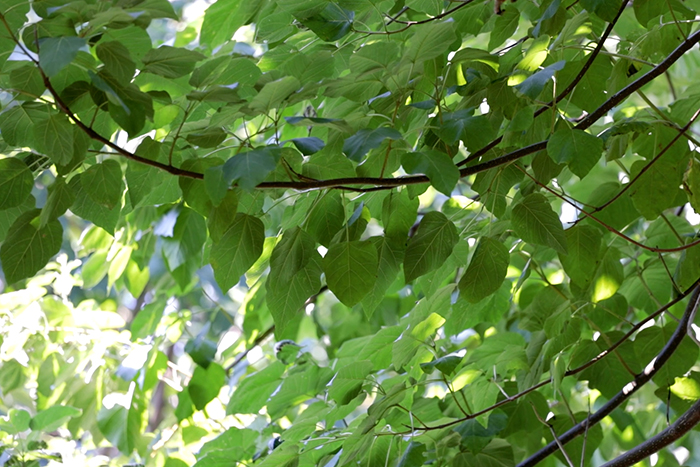
Paulownia tomentosa is a medium-sized deciduous tree, with beautiful ovate or slightly lobed leaves up to 25cm long.
THE’Maximum height can reach 25 meters if not contained with pruning.
In spring it produces fragrant, lilac-purple flowers, collected in large panicles. The fruits are ovoid, first tending towards green and then towards dark brown.
It has heart-shaped leaves up to 30cm long, light green in color and with a hairy lower blade.
Paulownia is also known as the “Tsarina tree”.
How long does Paulonia take to grow?
With one of the highest growth rates in the world, Paulownia can grow up to 4.5 meters each year reaching maturity in approximately 7 years.
How big does Paulonia get?
Paulownia tomentosa can reach heights on average between 9 and 18 metres; there are specimens that reach 25 meters.
Paulownia tomentosa grows up to 6-8 metres with a wide and widespread crown and a straight and cylindrical trunk.
Taxonomic description
Genus composed of 6 species of deciduous trees, it is part of the Paulowniaceae family (APG IV classification) and of the Scrophulariaceae family (Cronquist classification).
Habitat
It is widespread in the wooded areas of China and Korea.
Curiosity
Paulownia was imported by the Dutch East India Company to Europe in 1800 and was dedicated to Grand Duchess Anna Paulowna Romanovdaughter of Tsar Paul I of Russia and wife of King William II of the Netherlands.
In Japan this plant is considered a sacred tree, its silhouette was drawn on the robes of emperors.
This genus of plants has been present on earth for hundreds of thousands of years. In Italy, in Pocapaglia (Piedmont), Paulownia fossils belonging to the Zanclean – Pliocene period have been found.
latest posts published

Tired of working in the garden? What can be done to reduce maintenance
How to successfully transplant a Christmas tree

Landscaping a new plot: where to start?

What grows in clay: This is what worked on Juste’s farm
Organic seeds: are they worth paying more for?
Preventive spraying of tomatoes with homemade remedies –
Environmental management: how to renovate a bored plot?
Designers answer what are the 3 best plants for the garden
Fruit trees online: how I ordered them and how I planted them