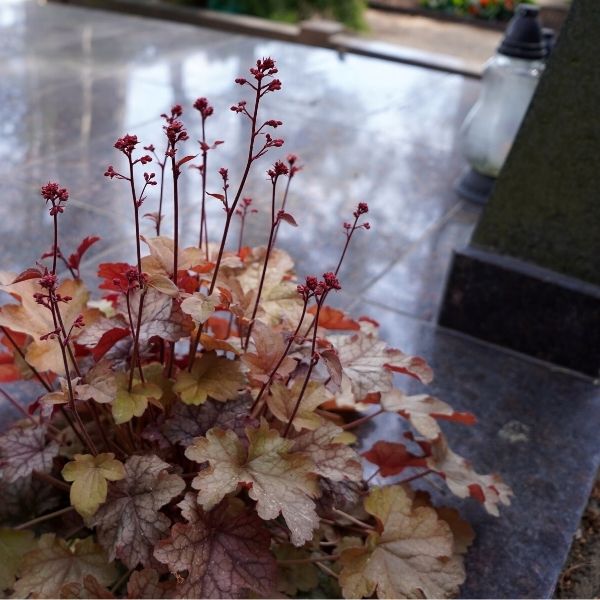
Have you ever heard of Radermachera?
Maybe not. After all, as befits something a little magical and particular, its name is not yet that widespread. Some time ago we told you about the Jacaranda, about what the enormous tree that you find in the center of an enchanted clearing could ideally be like. Here, the Radermachera instead is the small delegation.
Looking at it, small and compact, it would not be surprising to see a flickering of fairy wings peeping out from the thick green of the pointed leaves.
Radermachera
Radermachera sinica is one of us houseplant which only in recent times (more or less in the 80s) has begun to enjoy good success, in particular for its tolerance towards hot air and low humidity. Characterized by its many shiny, beautiful green leaves, generally thin and delicate.
It must be said, however, that in its places of origin it reveals a very different side, in fact think that in nature it is a real tree that grows up to 30 meters!
It has many common names, all of which evoke the image of a graceful, delicate and even a little mysterious plant: China doll, emerald tree and snake tree. I mean, don’t a lot of evocative images already come to mind?
This plant is part of the Bignoniaceae family, and is native to southern China and Taiwan.
In terms of size, Radermachera tends to remain rather small and can have wonderful flowering trumpet-shaped flowers.
Caring for Radermachera
Taking care of her is not an immediate thing but don’t worry, with some guidance you will get to know her and in no time you will learn how to raise her as best as possible!
Light
These plants require lots of light, but never directexcept in winter. They must be placed in a point from which they can absorb light for at least 4-5 hours a day.
Waterfall
To know when to water, simply touch the ground, when it is dry for the first centimeter of depth it is time to proceed with the following watering. However, be careful not to water it too frequently, root rot is always lurking!
In the cold months it is possible to reduce the number of irrigations.
Land
The ideal soil of Radermachera is well moist but also able to drain efficiently. If the soil chosen is not draining enough, it is important to compensate by adding coarse material such as pumice stone, sand, etc. to the bottom of the pot.
It must also be rich in nutrients. As always, we recommend our Florenpot, One and One+, ideal for houseplants!
Temperature
Like all houseplants, they do not like cold temperatures, for this reason from 18 to 24°C will find its ideal conditions! Be careful of air currents which are poorly tolerated by this plant.
Fertilization
The ideal would be to fertilize it at least twice a month during the vegetative growth phase. That’s fine one fertilizer liquid for green plants slightly diluted compared to the doses recommended on the label.
During the rest months, however, the overall number of fertilizations can be reduced.
Furthermore, after repotting it is better not to feed it for about four months.
I repot
This is an almost inadvisable step when talking about Radermachera. In fact, as we will see shortly, it is a very habitual plant and a change as profound as repotting could significantly harm it. So if it is not necessary to proceed with this practice, it is better to avoid it.
Propagation
Propagating Radermachera is not at all simple, but not impossible. The ideal method is through cuttings of green wood.
Problems
• Brittle leaves that turn yellow: does not receive enough water.
• Leaves with black tips: too much water.
• The leaves of the plant are dry and fall from the stem: that part of the plant probably wasn’t watered enough and it died. It is not possible to recover it, so it is better to proceed with cutting the damaged area which will regrow from scratch.
As far as parasites are concerned, it is quite resistant, but there are some enemies that manage to cause it damage, among these we find cochineal, mites and aphids. In the event of one of their attacks, don’t worry, there is the right remedy for everyone!

The queen of routine
One important thing to know about this plant is that she’s quite a habit and, consequently, does not like changes. A change in routine regarding light, water, temperature or repotting could very likely cause significant leaf drop. In this case, however, do not despair, the battle is not lost. First of all you need to cut the remaining stems by about half. Then decrease the quantity of water administered (as in these conditions it tends to be even more sensitive to this phenomenon) to avoid the onset of root rot which would make the plant unrecoverable. Having said that, give it time and you will see that with a little care it will get back into shape.
latest posts published
Tired of working in the garden? What can be done to reduce maintenance
How to successfully transplant a Christmas tree
Landscaping a new plot: where to start?

What grows in clay: This is what worked on Juste’s farm

Organic seeds: are they worth paying more for?

Preventive spraying of tomatoes with homemade remedies –
Environmental management: how to renovate a bored plot?
Designers answer what are the 3 best plants for the garden
Fruit trees online: how I ordered them and how I planted them