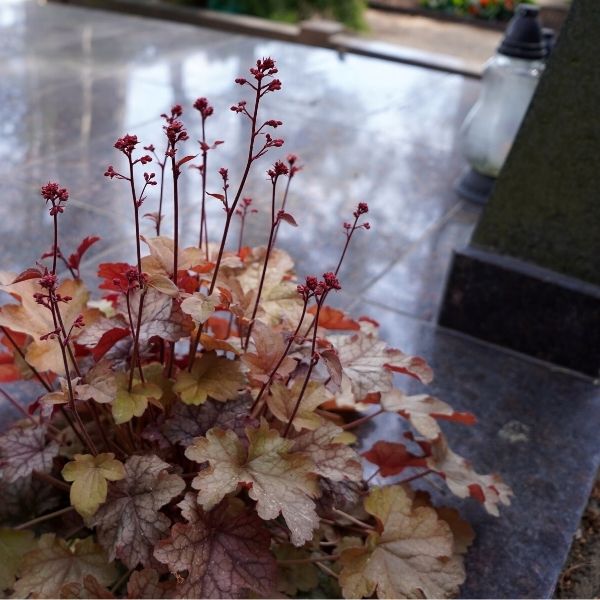
How to decorate the courtyard to make it elegant? Where is the fine line that separates tastelessness from an artistic idea? If you want to decorate your garden yourself, but doubt your artistic abilities, read on. I talk to landscape engineer Gytis Lietvaičius about tastelessness and bold eclecticism, reusing things, the prospects of plastic storks and creating a fairy tale in your garden.
Who decided what kitsch is?
Gytis Lietvaitis at the conference on environmental design”Garden style” will present the presentation “Virtual visit to the forest garden: objects, colors, plants”. A little fairy tale full of colors and shapes, just like the courtyard of the Gytis farm. But about him a little later.
You don’t need to have an artistic backdrop to beautify your yard. However, many have a doubt: I will not multiply, I will not evoke nonsense, it will not be kitsch and tasteless. We have already heard complaints from designers about plastic storks, gnomes, flowers in tires.
However, Gytis says there is no single answer: the boundaries of kitsch are somewhat blurred. It all depends on the owner’s tolerance for colors and objects.
If you like minimalism and fifty shades of gray, when other objects appear in the yard, the fuses of kitsch can explode quite quickly.
But there is another group of people who have a higher tolerance spectrum for colors, various objects and small details: they like variety of colors.
Gytis also belongs to the latter group, so the landscape engineer is in no hurry to judge.
Garden gnomes and wagon wheels
Of course there is no discussion about tastes, but why do gnomes often stay behind the fence? Gytis laughs that the problem is not wagon wheels or gnomes, but their prevalence: imagine if there were only a few farms decorated with such an attribute, we would probably be amazed by the original idea. Here, for example, is the pot house in Žagarė: it is truly unique and eccentric. It’s not about any artistic value, but it would also be hard to call it kitsch, Gytis says. If every second Lithuanian decorated their farm with pots, no one would go to Žagarė anymore.
This is what happened with the wagon wheels hanging on the wall. The same thing happened with the dwarves. The repetitive idea has become banal, uninteresting.
The most interesting are those ideas that are unique and have a history. But how do you create that story in your own backyard?
How stories are born in the garden
Gytis is convinced that every object in the courtyard needs a legend, a story, why it appeared in a certain place. A landscape engineer has two creative paths:
- sometimes the idea is born first and then the objects appear;
- But the opposite also happens, says the creator: Different objects in the yard can create a legend.
For example, Gytis surrounded the circular courtyard area with a wicker fence to better control the elevation and create shelter. Then he noticed that being inside the site creates a sense of security and warmth: you feel like a bird in a nest. That’s why they called that part of the courtyard the Nest. And then you can decorate the “nest” with details that would be related to the birds.
It is important not to be afraid to create even if you don’t have a strong idea: the idea can reach you during the process or even when you already have a result. In Gytis’ courtyard objects appear completely spontaneously: sometimes they arise from intuition, from an inner voice, from accumulated experiences or visions acquired during travels. But sometimes things happen much more concretely: Gytis simply uses what he has at hand, so in many cases old things get a second life here and create a new fairy tale.
A colorful fairy tale from the courtyard of Gytis
A landscape engineer not only uses old objects in his work, sometimes he also gives new life to the jokes thrown by nature. This year, for example, after a heavy snowfall, many tree branches broke. It would have been easier to cut them into firewood, but Gytis looked at the situation creatively and made the sides of the raised beds from the fallen wood – this way the trees in the yard will extend their life.
Gytis also created a fairy tale for his chickens, more precisely, a fairy house. A dark blue chicken coop with a round window and an arched doorway has become a real decoration of the yard. Gytis used what he had on hand to build the house: there weren’t many boards, so he had to step away from the situation and forge them in a somewhat unusual way. The result surprised even the creator himself: the boards resemble chicken feathers – they overlap each other. The house is decorated with decorative details: on the roof ridge there are two birds created by artists and a richly carved gutter. And the roof itself is covered with plants. In the chicken coop, the language of this building simply cannot be called a real chicken coop.
Colors are necessary to create a strong impression, says Gytis. Such decor will please the eye not only in summer, but will also stand out in the dark season. In his backyard, the engineer also installed a brightly colored pergola to support the grapes. Gytis says the pergola’s columns are decorated with geometric patterns, and he cut the roof with a petrol saw and polished it himself with an angle grinder. The colors of the pergola are really bold: white, bright green and blue. If he had pink paint, he would have used it, the developer says. The lighting installed above the pergola allows you to admire it even after sunset.
Previously, Gytis made colorful obelisks from wood: what are obelisks and how to use them to decorate the courtyard, read here.
How to decorate the yard: even more bold ideas
Gytis encourages you to be brave and experiment: to think of your garden as a playground where you can allow yourself to make mistakes or change the rules whenever you want. The most important thing is not to think about what others will think or what labels they will attach – you create your own fairy tale for yourself first.
latest posts published
Tired of working in the garden? What can be done to reduce maintenance
How to successfully transplant a Christmas tree
Landscaping a new plot: where to start?

What grows in clay: This is what worked on Juste’s farm

Organic seeds: are they worth paying more for?

Preventive spraying of tomatoes with homemade remedies –
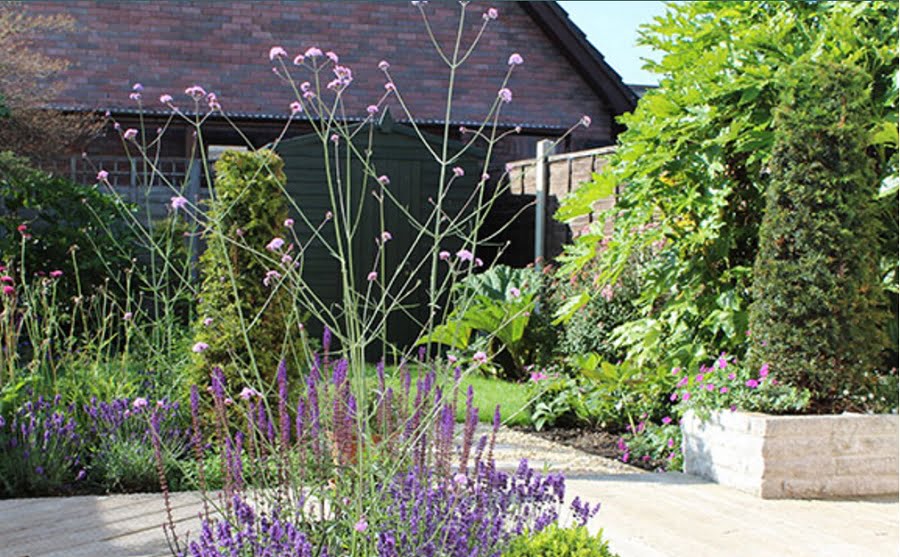
Environmental management: how to renovate a bored plot?
Designers answer what are the 3 best plants for the garden
Fruit trees online: how I ordered them and how I planted them