Some backgrounds are really difficult. THE vinyl wallpapers OR non-wovenhighly appreciated for their resistance and decorative effect, they are often covered with a waterproof plastic film. This coating makes humidification ineffective and complicates takeoff. THE washable wall coveringsthat are water resistant, or old ones tapestries placed on rough plaster They are also real headaches.
Is your wall made of placo? See our article on removing wallpaper from a Placoplatre wall.
Common installation errors
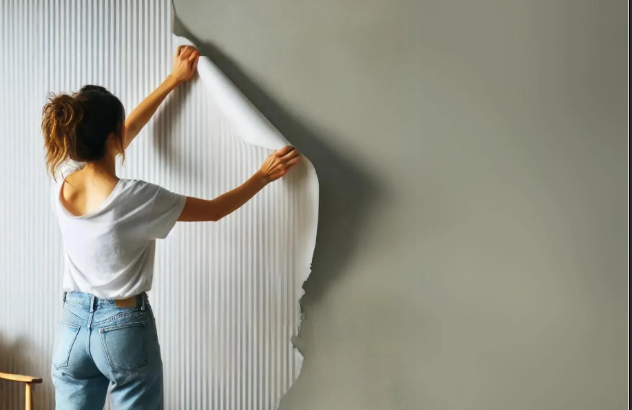
Wallpaper may become impossible to remove if the glue was applied without moderationwithout protective undercoat such as satin varnish or primer. If the support is rough or too porous (unprepared plaster), the glue penetrates too deeply, following even the smallest irregularities. Result: The wallpaper sticks to the surface like dried chewing gum.
The right tools to remove stubborn wallpaper
Basic equipment for effective removal
First of all, equip yourself like a pro. Here is the ideal list:
- Wide and flexible spatula (so as not to damage the wall)
- Steam pickler (essential for large areas)
- Sprayer or a sponge to wet the paper
- Blade scraper for glue residues
- Protective cover et gloves to work cleanly
Proven in-house products and solutions
There is no need to empty the DIY section. A homemade solution can be right for us:
- 2/3 warm water + 1/3 white vinegar 🍶
- Saint-Marc laundry detergent or black soap
- Possible addition of bicarbonate for tough glues
These mixtures are sprayed on the tapestry to soften it. Think about it scratch the surface lightly with a wire brush beforehand, to allow the liquid to penetrate well.
Foolproof techniques to remove even the worst wallpaper
The steam method: the formidable weapon
THE steam pickler it releases hot steam that passes through the wallpaper and relaxes the glue. Leave for 10 to 15 seconds per area, then scrape gently with a putty knife. Favor a flat movement, without forcing. Proceed in small areas to prevent the wall from cooling down too quickly.
Manual tip: scrape, dip, wait
Without a stripper? Patience is your best ally. Scratched with a blade, then abundantly moistened, the tapestry eventually comes off. Wait about fifteen minutes before scraping, until the moisture takes effect. Ideal for small surfaces or stubborn residues.
Comparison of effective take-off techniques
| Method | Advantages | Disadvantages | Ideal for |
|---|---|---|---|
| Steam pickler ✨ | Fast, effective, few chemicals | Investments, caution on fragile walls | Large walls, vinyl papers |
| Water + white vinegar 🍶 | Economical, natural, without strong odor | Less effective on laminated cards | Classic coverings |
| Peeling product 🎧 | Powerful and fast action | Cost, sometimes irritating | Very old wallpapers |
| Manual technique ✂️ | Accessible, without special purchase | Tiring, long | Small areas or finishes |
How to protect your walls during takeoff
What to avoid at all costs
YES never scrapenor use a stiff scraper on bare plaster. This irreparably tears the lining or leaves deep scars. Also be careful not to do this too wet placus walls: risk of swelling or deformation.
Small gestures that safeguard your surfaces
Always test on a small area before treating the entire surface. Use a well wrung out spongeand work on small areas, leaving the product to act. If the wallpaper does not arrive, it is better to repeat the application rather than force it.
What to do if the wallpaper is still resistant?
Wallpaper that tears or disintegrates: how to react
If the paper fragments every time you try, use a metal brush to scratch the surface, then apply a warm solution. Scrape as you go. Sometimes the only option is to remove the coating in several layers.
Last resort: professional solutions
If after all this nothing works, call at upholsterer or painter equipped with industrial stripper. It’s a budget, of course, but it allows you to preserve the integrity of the wall and start again in a healthy way.
Prepare the wall after removing the wallpaper
Cleaning and repairing walls
Once wallpaper is removed, traces of it often remain hill OR irregularities. Use a sponge and warm, soapy water for residue. Gently grate any stubborn bits, then apply to smoothing coating if necessary.
Repaint, reupholstery or let it breathe
Always leave the wall secure 24 hours a day before considering a new wall decoration. You can then apply to breathable paintenter a new one non-woven wallpaperor leave the wall bare for a very trendy raw look.
A well-prepared wall is a wall that lasts. And your next decoration will do you good.
latest posts published
Tired of working in the garden? What can be done to reduce maintenance
How to successfully transplant a Christmas tree
Landscaping a new plot: where to start?

What grows in clay: This is what worked on Juste’s farm

Organic seeds: are they worth paying more for?
Preventive spraying of tomatoes with homemade remedies –
Environmental management: how to renovate a bored plot?
Designers answer what are the 3 best plants for the garden
Fruit trees online: how I ordered them and how I planted them