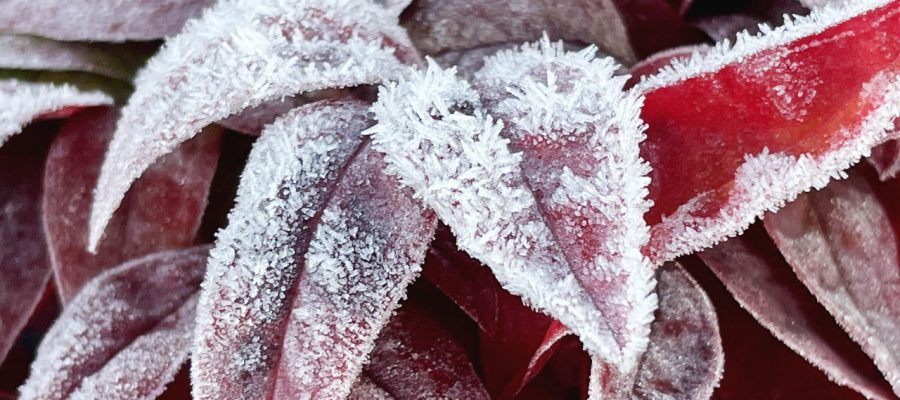
In this article we talked about simple rules that can help us manage indoor plants during the winter season, today instead we will give some tips on how improve the management of outdoor plants during the cold season. So let’s see how to protect your garden plants from the cold with 9 useful tips.
1. The importance of the ideal temperature of plants
Continental winter is certainly a more dangerous season for indoor tropical plants than for garden plants, essentially because, while the former are forced to live in a climate that bears little resemblance to the tropical one from which they come, the plants that are inserted into gardens are almost always native essences of continental climates.
It is important to keep in mind that sometimes it is necessary interpret the contentsremembering that Italy goes from Alpine regions with extremely harsh winters to extremely mild Mediterranean climates even in winter.
So the foresight is to modulate these recommendations according to the area of interest.
Thanks to increasingly mild winters, even in the internal and flat areas of the peninsula, we are daring with essences that 30 years ago we would probably never have decided to plant.
Here in Brescia, recent winters have rarely seen minimum temperatures below -5°C. Frosts are always shorter and less intense, almost never lasting for the whole day.
Over the years, therefore, Mediterranean species have appeared in the gardens, first oleanders and olive trees, then Buganvillea, finally the Mimosa, some brave people have even planted the Jacaranda.
So how do you know the thermal needs of plants? In the nursery’s product sheets there are always indications on the correct temperatures for growing the plant, otherwise we recommend the RHS website, which is always very reliable!
To find out more about temperatures here is a specific article 🙂
2. Pruning for frost-sensitive plants
A plant like the oleander is prescribed with a minimum interval between 1 and -5°C but it is possible to see it thriving in the Po Valley. Of course, for many it is still worth being careful to prune it, as well as the olive tree end of winter to prevent frost from penetrating the cuts.
According to our experience, this practice is no longer very widespread either, it certainly remains a useful precaution and, if the temperatures were to be even lower, it will be enough to postpone pruning until the end of the frosts for all these plants tender frost as the English call them, that is, sensitive to frost.
In general we prefer to prune at the end of winter when perhaps there are already some buds starting, this way it is easier to see which direction the plant is taking.
3. Covers with non-woven fabric, protect the plants with non-woven fabric
Today we know that if we want to grow a Bougainvillea in areas with cold winters we can buy the Bougainvillea x sptectoglabra species and go down to -15°C without problems.
Once upon a time, however, this was not the case and there were people who went so far as to set up monstrous catafalques to protect their classic Bougainvillea growing under the porch during the winter, assembling a structure of bamboo canes in order to wrap it with non-woven fabric.
Working solution but really tedious to assemble and disassemble every year.
But the Non-woven fabric is one of the best allies we have to protect sensitive plants growing in the open ground from the cold.
Abbreviated with the acronym TNT is a thermal fabric which effectively insulates the vegetation.
Phormium, agaves, yuccas, are often grouped, tied and wrapped. Excellent precaution also for rustic tree ferns such as Cyathea cooperi and Dicksonia anartica.
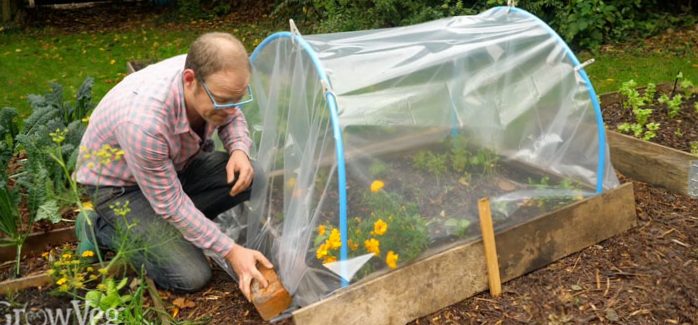
Alternatively you can use tnt hoods.
It is a breathable fabric that should avoid humidity stagnation but if the plants are few and/or small, on nice days they can be opened for a few hours and allowed to breathe.
As well as insulating the TNT prevents ice from settling on vegetation and reduces the risk of boiling.
4. Small greenhouses or cold verandas for citrus fruits and succulents
Luckily, it is easier to protect those essences that are usually kept in pots, such as lemons and succulents, from frost.
The Citrus fruits benefit from winter sheltereven 3-5°C. They start again earlier and with much more determination if they have received the right amount of “cuddles” in winter, the quantity of fruit will also be greater.
Succulent and succulent plants are also fine to be sheltered at these temperatures but be careful because it is a valid rule for the most common ones. For example, a White Ghost Euphorbia, it is better to keep it at +15°C.
If you instead decide to use cellophane to keep succulents warm, we recommend airing every now and then to avoid the onset of root rot.
Citrus fruits also need some replacement or too stagnant air will lead to the arrival of parasites such as cochineal.
In general, younger plants are more sensitive, it is in fact important to start cultivation in pots, then gradually proceed with repotting in larger pots which, even if not movable, are easier to shelter.
5. How to do it and what is plant mulching
This is a practice that, although it can be taken a little lightly, has enormous potential.
Nothing prevents you from using it also in pots and planters outside but It is in the flowerbed that it expresses itself best. You can use straw, collected leaf compost, shavings. We use one of the materials that we consider the best, which is bark, there is an excellent product on the shop, a national bark but also aesthetically pleasing, excellent value for money. Wood is an efficient insulator, even more so the bark that trees produce for this purpose.
In case you use it towards the end of winter instead of removing it, it is good practice to reinstate it, because it is also fantastic for protecting the roots from the summer heat and allows the soil to dry out less quickly.
Mulching brings further benefits, for example, it drains, does not hinder gas exchange between soil and air and hinders weeds.
Except for grasses and other perennials which have an aesthetic value even when dry, it is better not to leave perennials that go dormant in winter exposed unnecessarily: it is better to cut the vegetation and cover it with mulch.
6. Fertilize the plants
For the flowerbed we recommend using slow release fertilizers (this is one of my favourites, also available for flowering plants), being a mineral that lasts 3-4 months of release, it is sufficient to administer it in March, June and September.
Instead, organic fertilizers are preferable during late autumn and winter, the best is manure but it often proves impractical or difficult to find. This can be remedied by using equivalent products, typically manure, perhaps pelleted which is very comfortable and smells good 😀
AND avoid fertilizers with a high nitrogen content because this important macroelement tends to weaken the tissues, which are more prone to boiling and breakage during the winter.
On the other hand, the use of phytostimulants indicated above all for thermal stress such as Algatron is excellent: the ideal would be to start administration in October with the last waterings but it can also be given via the leaves (obviously if there are still some leaves).
7. What does the autumn green manure technique consist of?
This is more of a tip for those who have a vegetable garden. But what is the meaning of the green manure? Serve for prevent leaching of the soil naked exposed to rain and atmospheric events. To do this, fast-growing crops are used that incorporate these nutrients. Before new sowing or transplanting, they are cut, left on the ground and then digged to incorporate them. They practically become organic fertilizers that return minerals to the soil when there are crops in the field ready to assimilate them.
You will find a category of specific seeds in the shop: mustard, horseradish, sweet clover, phacelia, vetch, clover… especially interesting are the Fabaceae which are able to fix atmospheric nitrogen by bringing it into the soil.
8. Potted plants: manage saucers in winter
Large pots and immovable planters are at the mercy of the conditions they encounter.
There is a threat that sometimes creeps in silently and spells the end of plants: saucers that collect the rain and soak the ground. Also pay attention to the planters and those beautiful Elho vases with integrated saucers.
A good practice if the pot is located on a lawn or on gravel is to drill holes in the saucers. If you then want to have a reserve in the summer you can make holes the size of common rubber caps found on Amazon, in this way it will be possible to open or close the drain as you wish depending on the season.
Further precaution: wrap the pots with bubble wrap to insulate them and add mulch on top.
Certainly where possible it is good practice to reserve shielded positions for them to the north or where the cold winds come from and expose them to the south where they can receive more heat.
9. How to protect plants from snow and wind?
In areas affected by strong or very cold winds, they are possible create barriers with wattle or wicker. However, they must have a certain permeability to prevent them from flying away. The best solution is natural hedges.
If snow settles on hedges or on the crowns of trees, especially evergreen ones, there is a risk that the branches will break. Shake off excess snow as it begins to accumulate on branches and prune hedges to taper at the top to minimize snow damage.
10. Climate change and gardening
Gardening in a changing climate brings with it uncertainty and the risk of more extreme weather.
Warmer winters are not necessarily good news for gardeners as they may prevent the deep protective dormancy common to many trees and shrubs. This increases their susceptibility to frost and burns caused by cold winds or sudden cold waves.
However, the mild winters experienced in recent years have led to better survival of more tender plants, increasing the range of species available to gardeners.
latest posts published

What causes headaches after wine? 3 myths debunked

Fortified wine or sweet wine? Discover the fascinating technique of fortified wines

Dessert wine – Types and production methods

The spritz, the perfect drink for summer

Phases of wine preparation

Hangover remedies: how to get rid of it, but also how to avoid it?

Wine aging: what is it and how is it done?

White wine: benefits, types and how to pair it correctly with food

Manual harvesting vs. mechanized: advantages and disadvantages